Hire skilled AI developers who fit your project. We provide AI engineers, machine learning engineers, LLM engineers, NLP engineers, and AI architects to build, improve, and support software for your business goals.
Hire experienced web developers to build fast, responsive websites and web applications for your business. We create custom web solutions with clean code, useful features, and a smooth experience across all screens and devices.
Need a mobile app for your business? Hire experienced developers who can turn your idea into a reliable app. We build Android, iOS, Flutter, React Native, Kotlin, and Swift apps around your goals.
From product design to software development, we help businesses build digital solutions that work. Our team handles UI/UX design, web and mobile app development, AI/ML solutions, and custom software development.
We create UI/UX designs, product interfaces, and responsive websites that make digital products easy to use, clear to navigate, and consistent across every screen, device, and customer journey for all users.
We build software around how your business actually works. Our development team creates websites, mobile apps, custom software, and AI solutions with good code, useful features, and reliable performance.
We are a software development company helping businesses build useful digital products. Learn about our team, culture, partnerships, careers, and how we build reliable custom software for growing businesses.
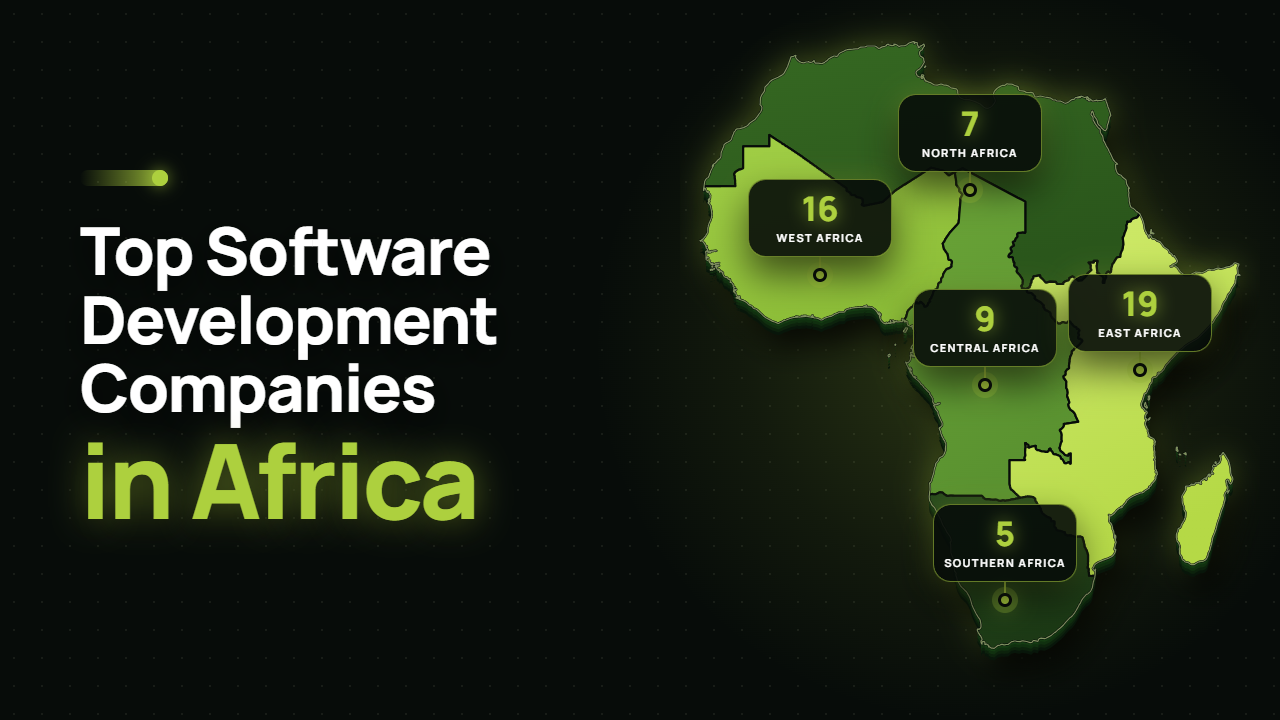
The top software development companies in Africa include InstaDeep, SystemSpecs, AfroVisioN Group, Craft Silicon and BBD. Each leads its region by designing, building and maintaining custom software for local and international clients. In total, we feature 54 firms from 54 countries, grouped into 5 regions with 1 standout each.
We picked one company per country using 6 criteria, including track record, verifiable clients and AI readiness. Most of these firms offer custom software development, web and mobile apps, cloud, fintech and AI services. AI is reshaping that work, from AI-assisted coding to new chatbot and machine learning offers.
Africa's 4.7 million developers also form the fastest-growing developer base of any continent. Hiring a team costs about $32.50 an hour on average, below Asia, Latin America and Eastern Europe. Lower hourly rates, time zone overlap with Europe and growing regional tech hubs add to the appeal.
You'll also get a 6-step checklist for choosing the right partner. We checked every company's data in October 2026, and this is a curated selection, not a paid ranking. Treat it as a starting shortlist, then test each firm against your own needs.
What Is a Software Development Company in Africa?
A software development company in Africa is an African-based firm that designs, builds, tests and maintains software. Its products range from web and mobile apps to enterprise systems and AI tools.
Most firms follow the full software development lifecycle, from planning and design to launch and support. Many serve local and international clients, often through offshore software development.
What Makes a Software Development Company the Best in Africa?
The best software development company in Africa is one with a proven record, real clients and modern skills. We used the same test to pick the best software development companies in Africa, one per country.
6 criteria used to select the top software development companies in Africa are outlined below.
Proven track record: Years in operation, an active website in 2026 and a clear history of delivered work.
Verifiable clients, projects or reviews: Named clients, case studies, Clutch ratings or Google reviews that anyone can check.
Technical breadth: Skills across web, mobile, cloud and data, so one partner can carry a full product.
AI readiness: Real AI services or products, such as chatbots and machine learning, not just buzzwords.
National or international reach: A strong home position, cross-border clients or offices in more than one country.
Security and compliance: Readiness for laws like the Nigeria Data Protection Act 2023 and South Africa's POPIA.
Which Are the Top Software Development Companies in Africa by Region?
The top software development companies in Africa by region are InstaDeep, SystemSpecs, AfroVisioN Group, Craft Silicon and BBD. They stand out in North, West, Central, East and Southern Africa, in that order.
Our list covers 54 African tech companies from 54 countries, sorted by UN region, not ranked. That UN grouping puts Zambia and Zimbabwe in East Africa, and Angola and Cameroon in Central Africa.
The 5 African regions and their standout software companies are shown in the table below.
Region
Countries covered
Leading hub
Standout company
North Africa
7, with 6 featured and a note on Western Sahara
Cairo and Casablanca
InstaDeep, Tunisia
West Africa
16
Lagos and Accra
SystemSpecs, Nigeria
Central Africa
9
Buea's Silicon Mountain, Cameroon
AfroVision Group, Cameroon
East Africa
19
Nairobi and Kigali
Craft Silicon, Kenya
Southern Africa
5
Cape Town and Johannesburg
BBD, South Africa
Which Are the Top Software Development Companies in East Africa?
The top software development companies in East Africa include Craft Silicon, Ingenosya, iCog Labs and Awesomity Lab. Kenya raised $1.04B in tech funding in 2025, more than any other African country. The UN grouping also places Zambia, Zimbabwe, Malawi, Mozambique, Madagascar and Mauritius in this region.
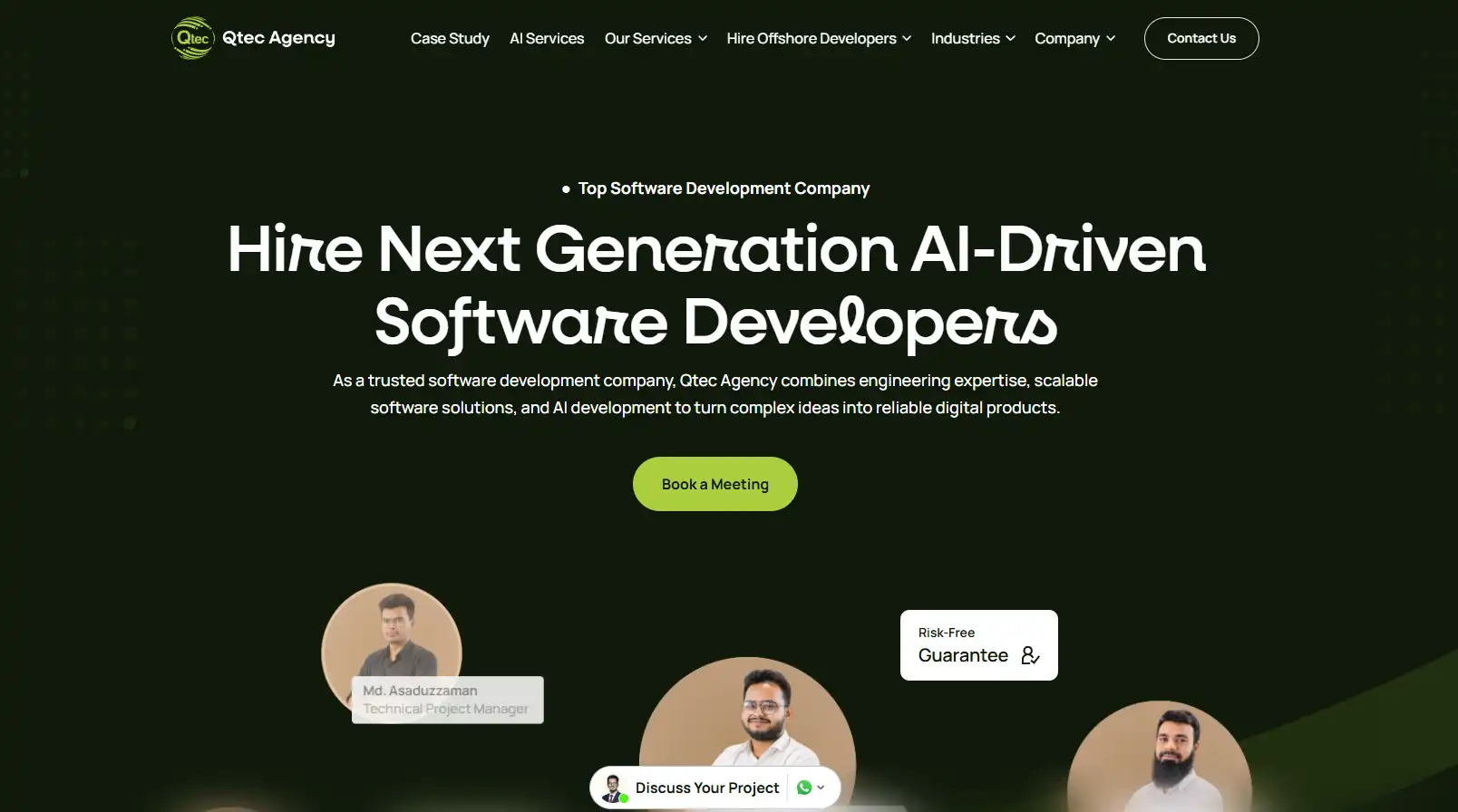
Qtec, our own team, comes first. 18 top software development companies in East Africa, one per country, follow.
Qtec is an AI-driven software development company with clients in 9 markets, including Uganda in East Africa. It helps businesses build custom software and extend their teams with pre-vetted AI experts.
Why it made the list: 200+ global businesses trust its developers, by its own count.
How it works: A Dhaka team that serves clients in Uganda and 8 other markets.
What it builds: Outsourced software development, product design, web and mobile apps, and AI development.
Verdict: Worth a call if you need AI-ready developers backed by a risk-free guarantee.
Ufanisi ICT Solutions & Research is a Burundian software company whose name means efficiency in Swahili. It pairs custom builds with application management, which keeps software maintained after launch.
Why it made the list: Founded in 2015, it lists a Liquids Management System in its portfolio.
How it works: A 10 to 49-person team in Bujumbura.
What it builds: Custom software, app support, web design and managed IT.
Verdict: A steady local option for ongoing app support.
Comores Informatique is a Moroni software company serving banks, businesses and government. WinDev and WebDev, its main tools, are French platforms for desktop and web apps. Its clearing software settles payments between financial institutions in the Comoros.
Why it made the list: Its bank clearing software has run at 7 Comorian financial institutions since 2006.
How it works: A Moroni team that builds in WinDev and WebDev for companies and government.
What it builds: Banking software and SALAMA, a medical-file app.
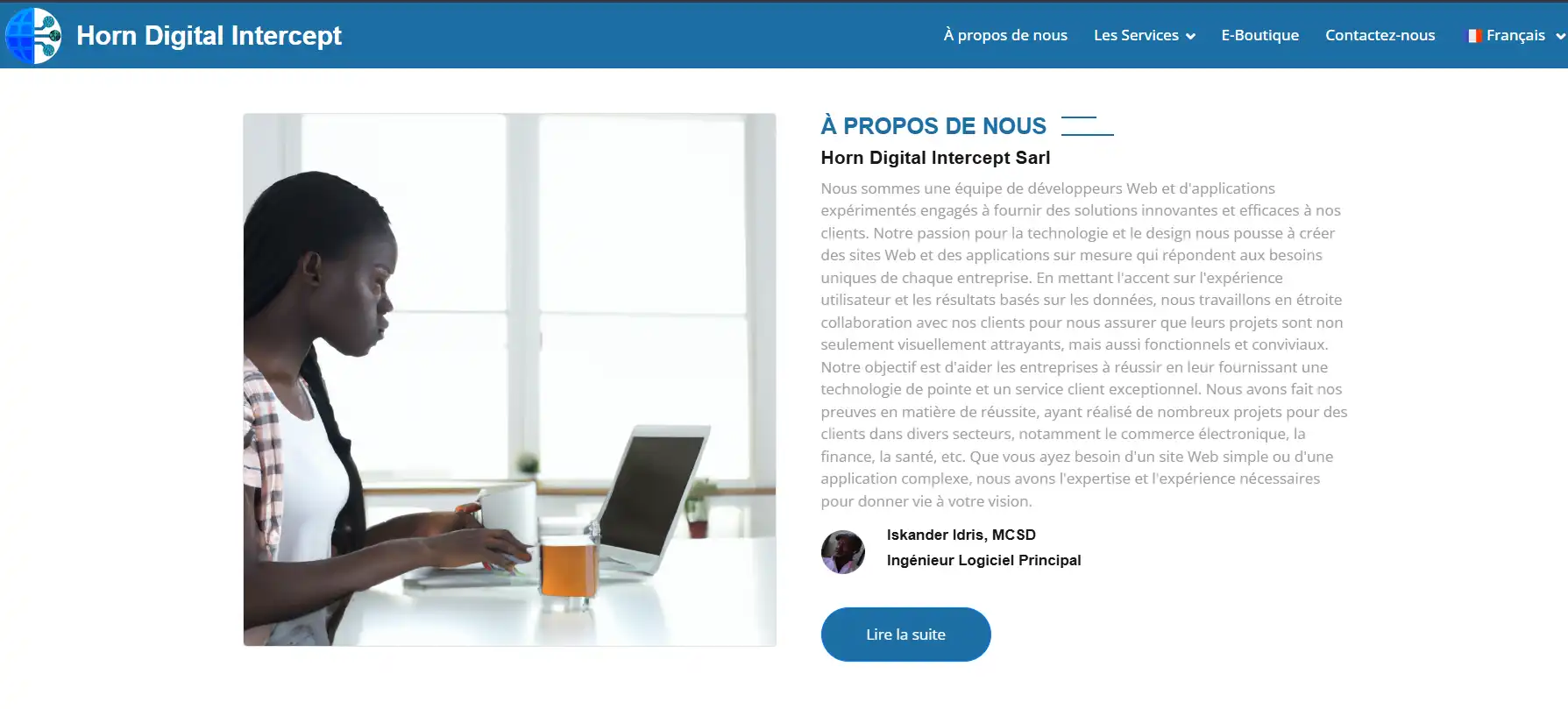
Horn Digital Intercept, known online as Djibit, is a Djibouti web and mobile studio. Its UI and UX work plans how apps look and feel, not just how they function.
Why it made the list: Trading as Djibit, it serves e-commerce, finance and health clients.
How it works: A Djibouti City team that also offers hosting and IT training.
What it builds: Mobile and web apps with in-house UI and UX design.
Verdict: Sensible for app projects that need design and hosting together.
Orange Asmara IT Solutions is an Asmara technology firm that handles software, web and network projects. Its management information systems turn company data into reports for decision-makers.
Why it made the list: It says it delivered Eritrea's first commercial Wi-Fi installation.
How it works: An Asmara team that mixes software with network projects like ADSL management.
What it builds: Business software, billing systems, websites and management information systems.
Verdict: A practical option in a hard-to-reach market.
iCog Labs is an Ethiopian company where AI research and product engineering sit side by side. Co-founder Ben Goertzel is widely known for his work on artificial general intelligence. It also applies AI to science and runs a talent pipeline for new engineers.
Why it made the list: 200+ experts, plus partners like SingularityNET and Hanson Robotics.
How it works: Founded in 2013 by Getnet Aseffa and Ben Goertzel, it works from Addis Ababa and Dubai.
What it builds: AI research, including artificial general intelligence, plus data work and robotics.
Verdict: A research-heavy AI partner that co-built Desta the Robot.
Craft Silicon is a Kenyan fintech software company founded by Kamal Budhabhatti. Alongside its Nairobi headquarters, it runs an Asia center in Bangalore. Saccos, or savings and credit cooperatives, are one of its core client groups.
Why it made the list: It was named to the Forbes India Select 200 DGEMS list in 2024.
How it works: Founded in Nairobi in 2000, it has 600+ staff serving 350+ client businesses.
What it builds: Core banking, lending and payments software for banks, microfinance lenders and Saccos.
Verdict: East Africa's standout for fintech, with a global client base.
Ingenosya builds and maintains software from Madagascar for clients overseas. French is an official language there, which helps with French-speaking clients. Its services span apps, ERP, business intelligence and AI.
Why it made the list: 150+ software engineers and developers in Madagascar.
How it works: It has run offshore development and maintenance for clients abroad since 1999.
What it builds: Web and mobile apps, Odoo ERP and business intelligence.
Verdict: Choose it for AI and data work in TensorFlow, PyTorch and LangChain.
Dream Code is a Malawian software company working across enterprise systems, apps and IoT. Its legacy modernization service updates old systems so they are safer and easier to maintain.
Why it made the list: Clients include Izemall and Fodema, plus a US-based website client.
How it works: Founded in Blantyre in 2019, it also handles QA and legacy modernization.
What it builds: ERP, CRM, mobile and web apps, and IoT.
Verdict: Flexible for teams that need to modernize aging systems.
State Informatics Limited, or SIL, is a Mauritian company focused on government IT. Mauritius scores 84.2 on ITU's ICT Development Index 2024, among Africa's highest.
Why it made the list: It signed a partnership memorandum with Mauritius Telecom in September 2025.
How it works: 30+ years old, with subsidiaries in Namibia and Botswana.
What it builds: Government IT systems, data management and digital public services.
Verdict: A natural fit for public agencies digitizing citizen services.
LAMONE is a Mozambican technology company focused on telecom software and systems integration. Systems integration connects separate software so data can flow between them.
Why it made the list: It says its telecom solutions run across 50+ sites.
How it works: Founded in Maputo in 2012, it reports national pilots in digital identity.
What it builds: Telecom apps, ERP, systems integration and cloud.
Verdict: A good match for telecom and digital identity projects.
Awesomity Lab is a Rwandan software studio that has worked since 2015. It starts each project with discovery, a phase that defines what to build before coding. Cool Sheep AI, built with NSFO, shows its machine learning skills.
Why it made the list: Clients include the Government of Rwanda, Irembo, Volkswagen and GIZ.
How it works: A 20+ person team in Kigali and Delft, with 40+ projects in 7 countries.
What it builds: Product discovery, UI and UX design, and custom software.
Verdict: Design-led and AI-capable, as its Cool Sheep AI predicts a lamb's weight from a photo.
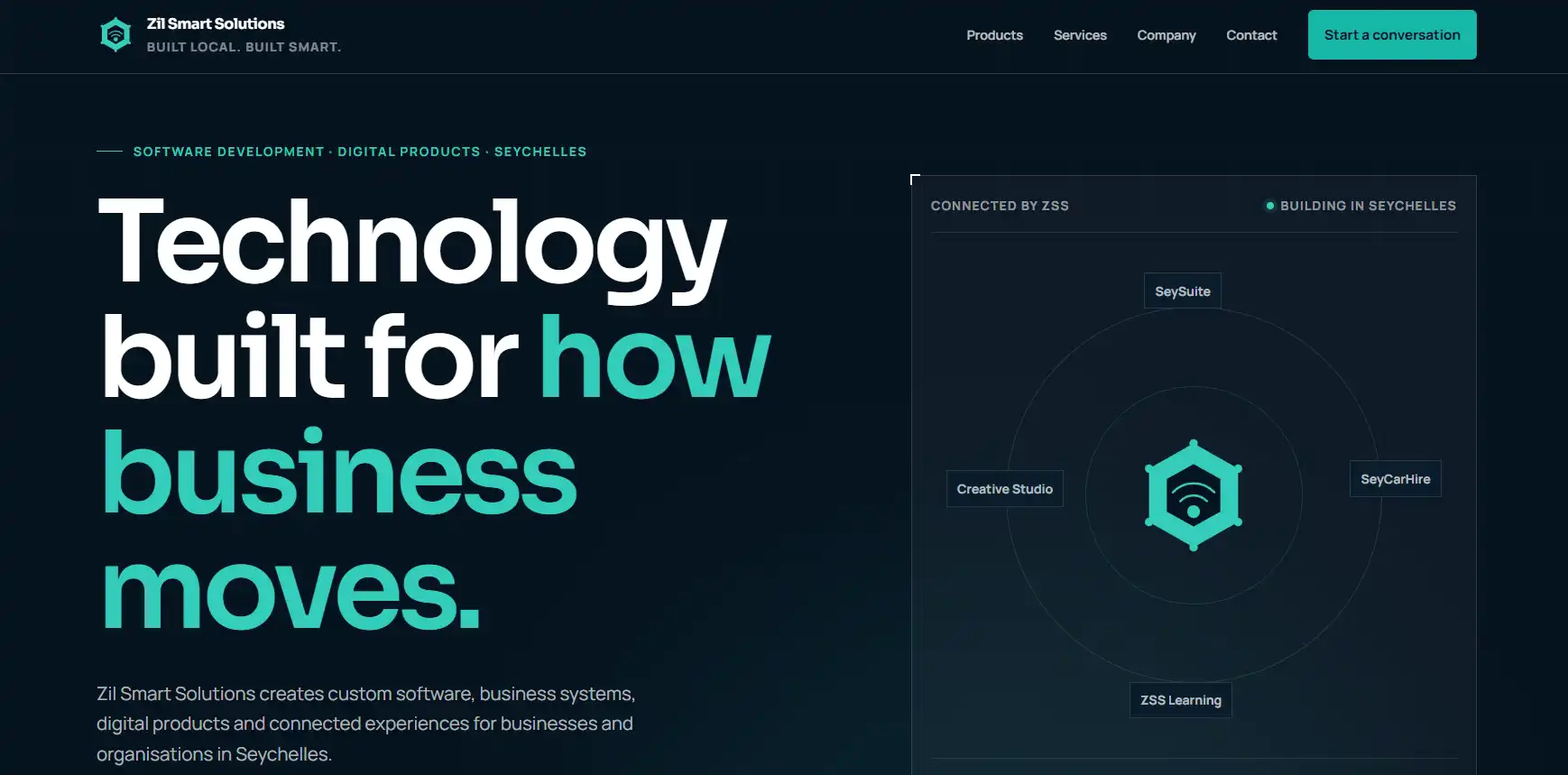
Zil Smart Solutions is a Seychelles technology company that builds products and client software. Seychelles scores 84.7 on ITU's ICT Development Index 2024, one of Africa's highest.
Why it made the list: It runs its own products, including SeySuite for SMEs and SeyCarHire.
How it works: The team mixes in-house products, client projects and technology consulting.
What it builds: Custom software and digital products.
Verdict: AI-minded, since its ZSS Learning arm teaches AI skills to local professionals.
Mogadishu Data Analysis Center, or MDAC, is a Somali firm focused on data and public sector IT. Its capacity building trains local staff so they can run systems themselves.
Why it made the list: It reports contracts with 5+ government ministries.
How it works: Founded in 2015, it pairs software with training and capacity building.
What it builds: Software, data analytics and IT consulting.
Verdict: Good for data-heavy public work, but verify its figures, since site counters vary.
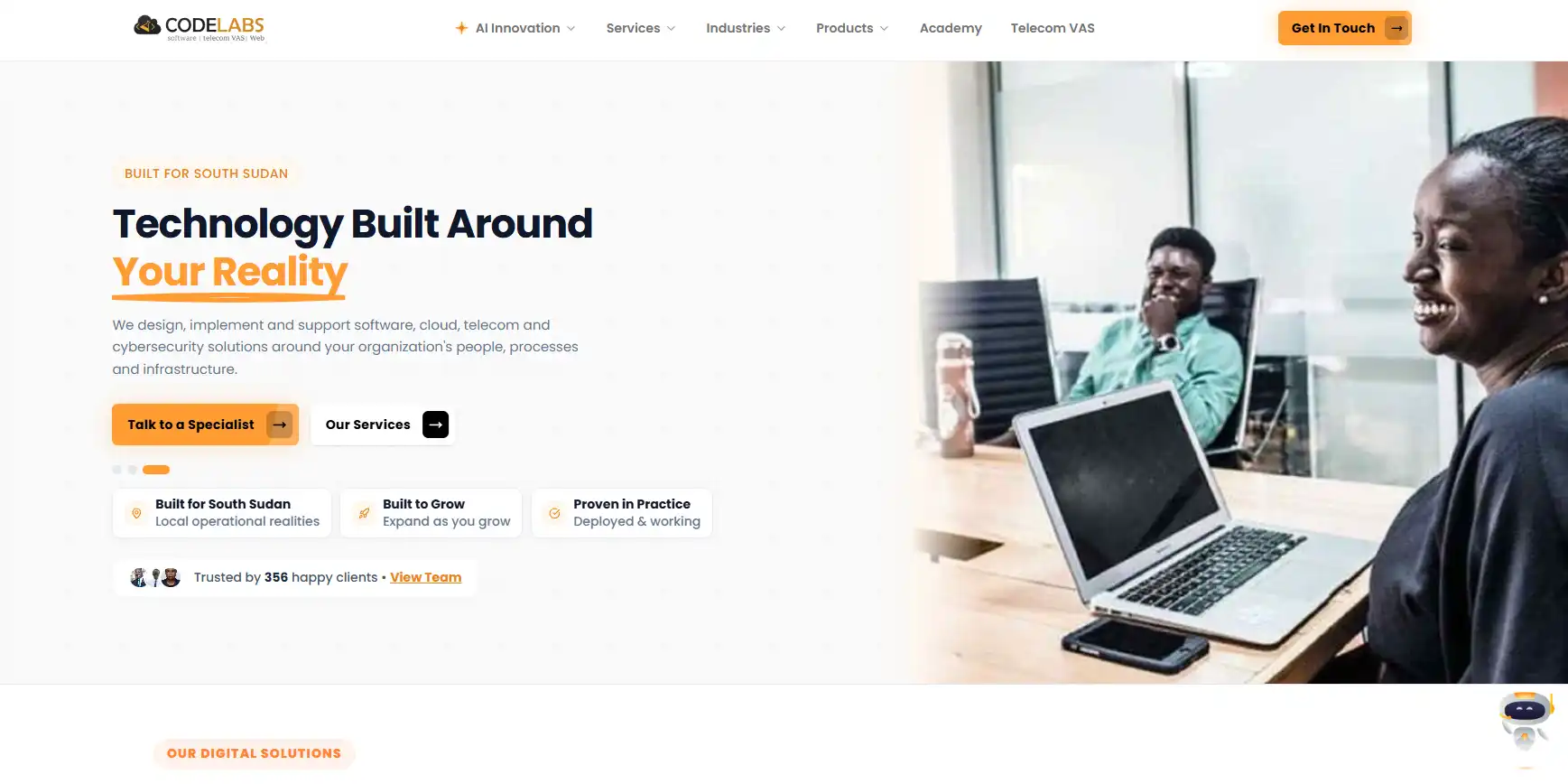
Codelabs is a South Sudanese software company based in Juba. Its biometric payroll system checks staff identity before payments go out. It also builds USSD apps, which work on basic phones without internet.
Why it made the list: It built a biometric payroll and cash-distribution system.
How it works: A Juba team that serves clients like Genevacall and LEM International.
What it builds: Web, mobile and USSD apps, plus cybersecurity and VSAT.
Verdict: Solid for payroll programs that need secure tools in tough conditions.
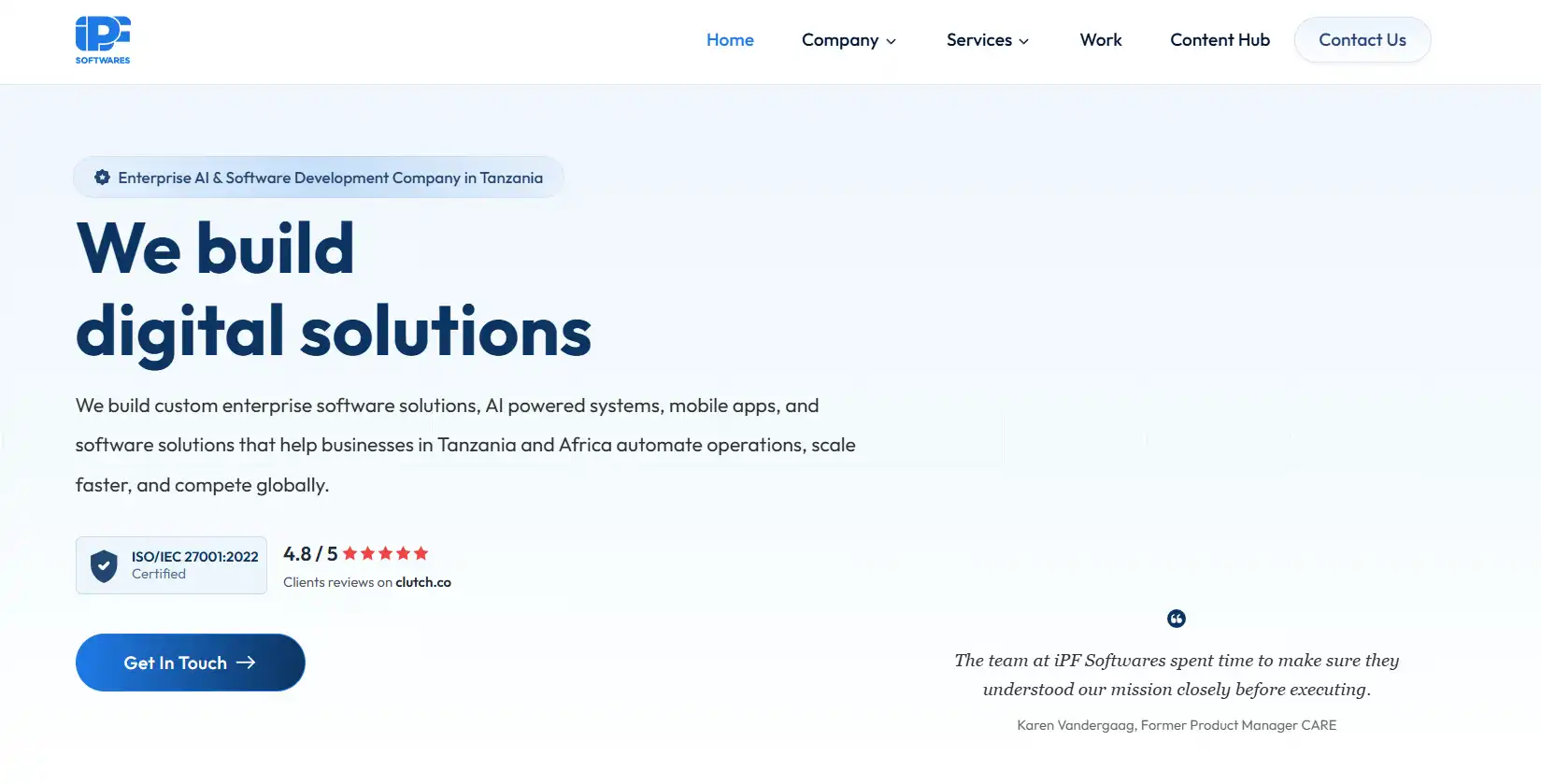
iPF Softwares is a Tanzanian company that builds client software and its own platforms. Niajiri, whose name means hire me in Swahili, connects job seekers with employers.
Why it made the list: Clients include Azam Media and CARE International.
How it works: Founded in Dar es Salaam in 2015, it also runs the Niajiri talent platform.
What it builds: Custom software, mobile apps and web platforms.
Verdict: A proven builder, with Niajiri passing 60,000 registered talents by 2021.
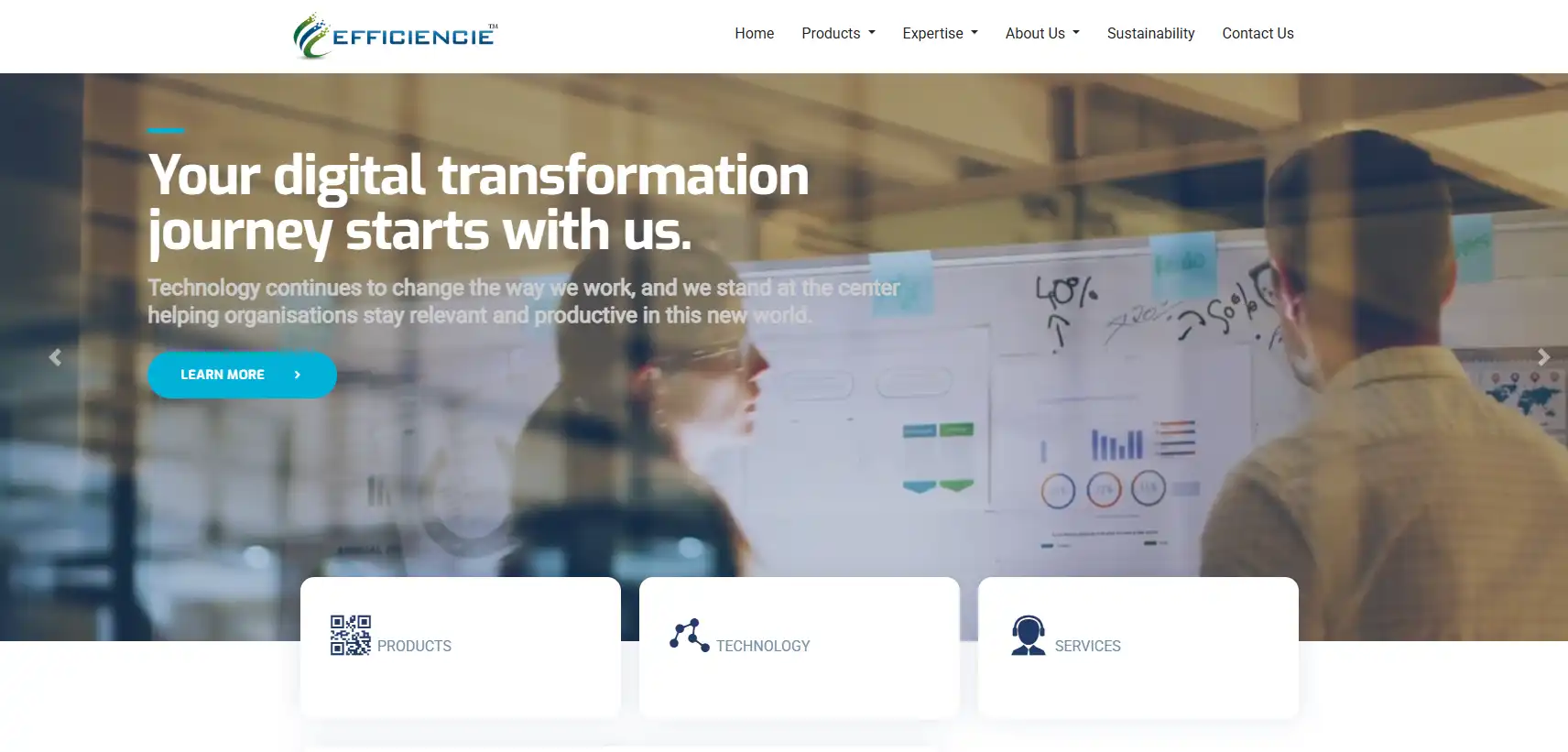
Efficiencie is a Ugandan software company in Kampala's Kansanga area. Its Electoral Commission project shows it can deliver for national institutions. Application support keeps client software running after launch.
Why it made the list: It built time-and-attendance software for about 800 Electoral Commission staff.
How it works: A Kampala team working since 2013, with AB InBev as a client.
What it builds: Custom software, web development and application support.
Verdict: Well reviewed, with a 5.0 rating on The Manifest for that project.
Probase is a Lusaka software company focused on payments and transaction processing. Its electronic funds transfer software moves money between accounts without cash or checks. It also builds custom software beyond payments.
Why it made the list: It serves tax authorities, pension houses and banks.
How it works: A Lusaka company with 80+ software developers.
What it builds: Funds transfer and transaction-processing software, plus mobile-money links.
Verdict: A capable partner for payment and mobile-money projects.
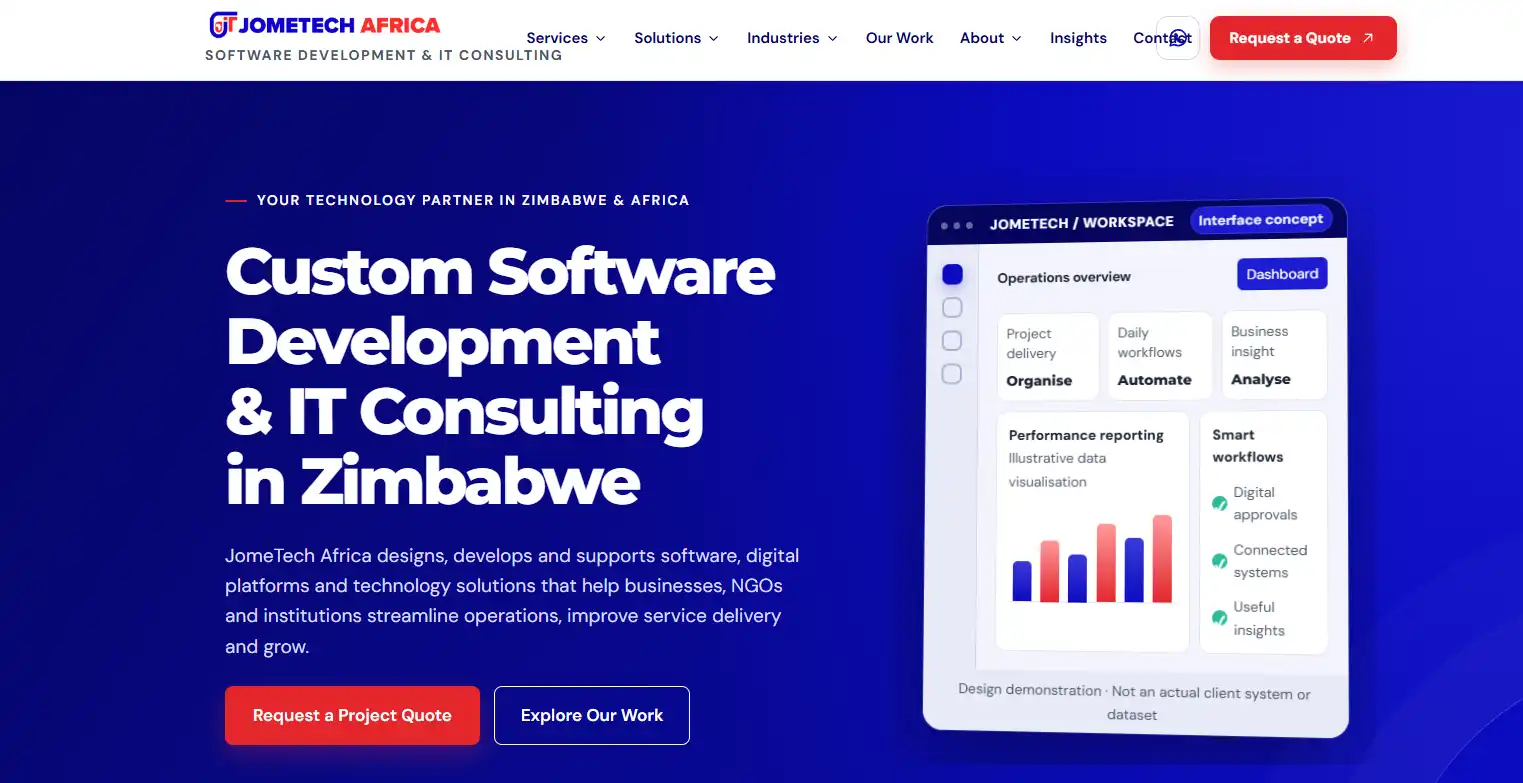
JomeTech Africa is a Zimbabwean technology company covering software, AI, security and hosting. That breadth suits firms that want one IT partner.
Why it made the list: A 5.0 rating from 78 Google reviews in October 2026.
How it works: A Harare team that pairs development with IT support, cloud and hosting.
What it builds: Websites, mobile apps, custom software and cybersecurity.
Verdict: Good for practical AI and automation that cut manual work.
Which Are the Top Software Development Companies in North Africa?
The top software development companies in North Africa include ITWorx, HPS, InstaDeep and Symloop. Egypt, Morocco and Tunisia lead the region. BCG puts 15% to 20% of Algerian, Moroccan, Tunisian and Egyptian developers in AI, machine learning and data.
6 top software development companies in North Africa, one per country, are given below.
Symloop Technology is an Algerian software engineering firm with 7 years of experience. Its client base mixes funded startups with large institutions. On the AI side, it builds RAG chatbots that answer from company documents, plus autonomous agents.
Why it made the list: 120+ clients, including banks and government bodies, by its own count.
How it works: 25+ salaried senior engineers deliver from Algiers and Sétif.
What it builds: Custom software, mobile apps, IoT, DevOps and cybersecurity.
Verdict: Best for Arabic and French AI, from chatbots to fraud detection.
ITWorx is a Cairo-based software services firm that works from the Nasr City Free Zone. It partners with Snowflake and Databricks for analytics and machine learning work. It also offers an AI Accelerator for clients testing generative AI.
Why it made the list: In business since 1994, with Fortune 100 and government clients.
How it works: Cairo and Gulf teams partner with Microsoft, Oracle and AWS.
What it builds: Custom software, Dynamics 365 apps, cloud and DevSecOps.
Verdict: A mature generative AI pick, with products like WorkWise AI and GeoGPT.
AlShafak IT Solutions is a Libyan system integrator that has operated for 29 years. It combines software, hardware and network work under one roof. The firm also runs IT training for client teams.
Why it made the list: 1,500+ finished projects since 1997, by its own count.
How it works: A Tripoli integrator that partners with IBM, Lenovo and Cisco.
What it builds: ERP, payroll and document software, plus datacenters and network security.
Verdict: Good for banks, telecoms and oil firms that need software and infrastructure together.
HPS, short for Hightech Payment Systems, is a Moroccan fintech software vendor. PowerCARD covers the full payment chain, from card issuing to acquiring and switching. The company posted $87.3M in revenue in the first 9 months of 2024.
Why it made the list: 21st on the Forbes Middle East Fintech 50 for 2025.
How it works: Founded in 1995 and listed on the Casablanca Stock Exchange since 2006.
What it builds: The PowerCARD payment suite, used by 500+ institutions.
Verdict: A proven choice for card issuers, acquirers and national payment switches.
Financial & Banking System is a Khartoum banking software house established in 2007. Its flagship, MIZAN, is a core banking system, the software that runs a bank's accounts and loans. Mu3een, its payment gateway, lets customers pay bills digitally.
Why it made the list: Moved its MIZAN core banking to the cloud for Dahabshiil Bank in 2020.
How it works: Major Sudanese banks are shareholders, and it operates in Djibouti, Somalia, Somaliland and South Sudan.
What it builds: Core banking, mobile banking and the Mu3een bill-payment gateway.
Verdict: Known as FBS, it's a strong fit for banks moving core systems to the cloud.
InstaDeep is a Tunis-born AI company co-founded by Karim Beguir and Zohra Slim. It raised a $100M Series B in January 2022, a year before BioNTech's offer. At acquisition, its team had grown to 240 people.
Why it made the list: BioNTech bought it in 2023 for up to about $680M.
How it works: Founded in Tunis in 2014, with offices in Lagos, Cape Town and Kigali.
What it builds: Decision-making AI and products like DeepChain, DeepPCB and AIchor.
Verdict: North Africa's standout for AI-first projects.
Western Sahara, a disputed territory, has no company on this list. We found no independent software firm there with a public track record.
Which Are the Top Software Development Companies in West Africa?
The top software development companies in West Africa include SystemSpecs, Kreezus, theSOFTtribe and Baamtu. Nigeria anchors the region with 1.1M+ GitHub developers in 2024, up 28% in a year. Startup Acts passed by Senegal in 2019 and Nigeria in 2022 also give young tech firms legal backing.
16 top software development companies in West Africa, one per country, are given below.
KANHOUN SOFT is a Cotonou software house that builds client projects and its own business tools. KanhounSync is multi-tenant, so many companies can run HR and payroll on one shared system. eStock adds invoicing and treasury on top of inventory tracking.
Why it made the list: It ships its own products, KanhounSync for payroll and eStock for inventory.
How it works: A Cotonou team with 10+ years on the market and an IT training arm.
What it builds: Web and mobile apps and digital payment integrations.
Verdict: Good for firms that want ready-made HR or stock tools.
Kreezus is a software publisher from Burkina Faso that also takes on custom projects. Its client list leans on telecom operators and banks. The team handles cloud and DevOps for the products it ships.
Why it made the list: Clients include Orange Burkina, Moov Africa and Coris Bank International.
How it works: Founded in Ouagadougou in 2018, with offices in Abidjan, Cotonou, Niamey and Paris.
What it builds: Mobile apps, SaaS and fintech integrations for 100K+ users, it says.
Verdict: AI-ready, with built-in AI in its Waazi platform and LangChain in its stack.
Sintaxy is a Cabo Verdean software company with a social mission around youth employment. It pairs client delivery with Academia Sintaxy, its in-house training program. That mix stands out in a small island market.
Why it made the list: Its academy won Best Digital Inclusion Project at Cabo Verde's 2025 Digital Awards.
How it works: 10+ years on the market, with a presence in Portugal.
What it builds: Custom software for clients from the US and UK to Chile and Angola.
Verdict: A well-traveled partner that also trains young developers for global work.
Snedai Technologies is the consulting and digital transformation subsidiary of Groupe SNEDAI. Much of its visible work is for the Ivorian state, from finance ministry projects to passport services. Its Tier 3 datacenters follow a standard built for high-availability hosting.
Why it made the list: It won tenders from the Ministry of Economy and Finance and the investment agency CEPICI.
How it works: An Abidjan subsidiary of Groupe SNEDAI, created in 2017.
What it builds: Web and mobile apps, e-payment platforms and Tier 3 datacenters.
Verdict: Suited to government-scale work, including online biometric passport applications.
Integify is one of the newest firms on this list, founded in The Gambia in 2024. It covers a broad stack, from desktop software to iOS and Android apps. Ask for code samples and references first, since its track record is still short.
Why it made the list: A 2024 startup with a public Clutch profile and a 10 to 49-person team.
How it works: The Wellingara studio takes projects from $1,000 and has no reviews yet.
What it builds: Websites, web and mobile apps, desktop software and AI integrations.
Verdict: A budget-friendly option for small builds, best tested with a pilot.
theSOFTtribe is a Ghanaian software company with 35 years in the market. It focuses on business systems for public bodies and large organizations. Confirm its current product range before you buy, since the published list dates from 2021.
Why it made the list: It has served governments, enterprises and institutions across Africa since 1991.
How it works: The late Herman Chinery-Hesse, often called the father of Ghana's software industry, founded it.
What it builds: Enterprise software, with a 2021 range that spanned HR, payroll, point-of-sale and ERP.
Verdict: A veteran pick for long-term public and enterprise projects.
O3Studios is a Conakry studio that builds software and incubates new products. Its goal is a homegrown software base, with local products for local problems. It works on B2B and B2G systems, meaning tools for businesses and for government.
Why it made the list: It partners with GUILAB and First Bank and targets 30 "Made in Guinea" products.
How it works: A studio and incubator based at Conakry's GUILAB center.
What it builds: Web, mobile and SaaS products, government systems and automation.
Verdict: Worth a look for AI, thanks to Oria, its bilingual text and voice assistant.
Kilintec is an IT company from Guinea-Bissau's capital, Bissau. It covers the full cycle, from consulting and software builds to hosting and IT training.
Why it made the list: It expanded from Guinea-Bissau into Cabo Verde and other sub-Saharan markets.
How it works: A Bissau team that pairs IT consulting with training.
What it builds: Custom software, web hosting and IT products.
Verdict: A practical Portuguese-speaking partner for software and hosting.
Apstract Tech Int'l is a Liberian technology firm that mixes software with connectivity. Its VSAT service is a satellite internet link for sites that fiber networks don't reach. Its case studies also include a Community Health Tracker.
Why it made the list: 20+ clients across banking, NGOs, government and mining, it reports.
How it works: A Monrovia team with 3+ years of delivery and VSAT satellite links.
What it builds: Custom software, apps, cloud, DevOps and cybersecurity.
Verdict: Good for public work, backed by a Government Document Portal project.
BoulevardTech is a Bamako company that builds business software for local organizations. Its offline-first design keeps records usable during internet outages. The firm also builds e-commerce sites for clients that sell online.
Why it made the list: 15+ years serving SMEs, NGOs and public bodies, by its own account.
How it works: A Bamako firm that pairs software with IT support and web builds.
What it builds: Invoicing, stock and HR software that works offline.
Verdict: A smart pick where internet access is patchy.
ECOTRAS is a Mauritanian technology firm that blends fintech with data and mapping work. Sanad, its super-app, bundles several financial services into one mobile app. Its remote-sensing work uses satellite data, which suits land and environment projects.
Why it made the list: It built Sanad, a financial super-app now live in Mauritania.
How it works: A Nouakchott firm whose founder spent 25 years in Germany.
What it builds: Digital platforms like Jiny, plus geospatial and remote-sensing systems.
Verdict: A rare mix of fintech and geospatial skills.
Dev4smart is a Niamey software company built around mobile and messaging services. USSD, the menu system behind many mobile money services, is one of its core skills. It also handles fintech integrations and IT infrastructure for clients.
Why it made the list: 150+ clients and 95+ projects since 2016, by its own figures.
How it works: A Niamey team that sells products like SmartPay alongside custom work.
What it builds: Apps plus SMS, USSD and voice-menu services that reach basic phones.
Verdict: Strong for mobile-first services, with the Chatbox360° AI chatbot on offer.
SystemSpecs is a Nigerian technology holding company with its head office in Oniru, Lagos. Remita, its best-known product, handles payments, financial operations and process automation.
Why it made the list: Its 4 portfolio companies together serve millions of users.
How it works: John Obaro founded it 30+ years ago, and it runs offices in Lagos and Abuja.
What it builds: Remita payments, HumanManager HR and payroll, and STSL enterprise IT.
Verdict: West Africa's standout for large-scale payment and HR software.
Baamtu is a Dakar firm best known for Odoo, the open-source business software suite. It also offers data, AI and cloud services, plus consulting and tech training.
Why it made the list: It has digitized 100+ ministries, agencies, NGOs and SMEs with Odoo.
How it works: A Dakar team with 16 years of Odoo work across Africa and Europe.
What it builds: Odoo ERP rollouts, data, cloud and DevOps services.
Verdict: Ideal for ERP projects, with custom AI models and real-time reporting.
TechLedger Solutions is a Freetown startup working mainly on public health technology. Its MamaCare platform sends maternal-health messages by SMS in Krio, Sierra Leone's lingua franca. It also builds disease surveillance systems and data dashboards for health teams.
Why it made the list: It built an Inter-District Health Dashboard for the Ministry of Health and Sanitation.
How it works: A young Freetown firm, founded in 2024.
What it builds: Dashboards, mobile-money links and MamaCare, a maternal-health service using Krio SMS.
Verdict: Focused and promising for health tech and public data.
DKS Technologies & Services is a Lomé software publisher and integrator. Its birth-declaration platform sends records from hospitals to town halls, where births are registered. The firm also offers cloud and cybersecurity services.
Why it made the list: It built a national birth-declaration platform that links hospitals and town halls.
How it works: A Lomé publisher with 14 projects and 10 platforms in production.
What it builds: SaaS, ERP and fintech, including ImmoGest for 5,000+ properties.
Verdict: AI-capable, with document extraction, scoring and the QuickServe WhatsApp bot.
Which Are the Top Software Development Companies in Central Africa?
The top software development companies in Central Africa include AfroVisioN Group, Groupe Elako, SATECH and Bravantic. BCG ranks Angola's developer community among Africa's fastest-growing from 2019 to 2024. In Cameroon, Buea's Silicon Mountain is the main tech hub.
9 top software development companies in Central Africa, one per country, are given below.
Bravantic is an Angolan technology company in the VMD Group portfolio. It develops and implements solutions across infrastructure, security and business systems. Its automation work aims to cut manual processes for its clients.
Why it made the list: It serves government, service providers and private firms within VMD Group.
How it works: It's registered as Evolving Technology Angola S.A.
What it builds: Enterprise systems, IT infrastructure, cybersecurity and process automation.
Verdict: Best for larger Angolan organizations planning digital transformation.
AfroVisioN Group is a Cameroonian software company founded by Mambe Churchill Nanje. It offers tech team staffing, which places its developers inside client teams. The company also names MTN Cameroon among its clients.
Why it made the list: 150+ completed projects, with clients like FlexyPay and MapMe.
How it works: Founded in 2006 and based in Buea's Silicon Mountain.
What it builds: Custom software, apps, QA testing, DevOps and IT support.
Verdict: Central Africa's standout for outsourced builds and tech team staffing.
GEYACOM is a young Bangui firm, set up in September 2025. Its early clients span digital policy and national sport. It also offers managed IT, so it can run and support systems after launch.
Why it made the list: Clients include the national digital agency ACDD and the national basketball federation.
How it works: It opened in Bangui in September 2025, with a team citing 20+ years in Europe.
What it builds: Web and mobile apps, information systems, QA and managed IT.
Verdict: Very new, so start small, but it already serves public clients.
SATECH is a Chadian software company that sells ready-made ERP products and IT services. Schooly and GestSchool Universités handle school and university administration, while GesCom Pro covers sales and stock. It also provides cloud and cybersecurity services.
Why it made the list: It built a grading platform for 8,500+ students and counts CNPS Tchad as a client.
How it works: Short for Saada Technology, it has 10+ years in N'Djamena.
What it builds: School and business ERP, including Schooly and GesCom Pro.
Verdict: The go-to option here for school ERP and BI automation.
SNC, short for Services Numériques & Conseil, is an IT services firm based in Pointe-Noire. With offices in Brazzaville and Kinshasa, it serves clients in both Congos. Its managed services cover the day-to-day running of client IT.
Why it made the list: Its first clients ran 24/7 port operations in Pointe-Noire.
How it works: Formerly SysNetCom, it has worked from Pointe-Noire, Brazzaville and Kinshasa since 2014.
What it builds: Business apps, cloud, Microsoft 365, cybersecurity and managed IT.
Verdict: Reliable for shipping, energy and banking firms that can't afford downtime.
Groupe Elako is a Congolese software company with products for business, banking and education. SYGBank serves microfinance institutions, which lend small amounts to people and small firms.
Why it made the list: Its CNDCI e-learning platform has trained 7,000+ students since 2021, it says.
How it works: Founded in 2019, with offices in Kinshasa, Lubumbashi and Kolwezi.
What it builds: Offline management software and SYGBank core banking for microfinance.
Verdict: A strong AI pick, with FChat Business, a CRM whose AI agent qualifies leads.
The Cloud Group is a Spanish technology firm with a dedicated subsidiary in Equatorial Guinea. Its SISCOVA project tied the national health system's vaccination records to QR codes. Private clients, such as the flour miller Harineras Bioko, also use its software.
Why it made the list: It built SISCOVA, the national vaccination QR system, for the government in 2022.
How it works: A Spanish-origin firm that has worked through local subsidiary Go EG Global SL since 2020.
What it builds: Custom software, mobile apps, ERP and CRM.
Verdict: A credible choice for national-scale public projects.
DATA PROCESSING is a Gabonese digital firm that builds custom apps and data systems. Its recent projects serve both public administrations and private companies. Gabon scores 74.7 on ITU's 2024 ICT Development Index, a solid base for digital services.
Why it made the list: Its 2025 case studies include an ERP and an online portal for an administration.
How it works: Based in Libreville, with an office in France.
What it builds: Web, mobile and business apps, plus data and cybersecurity.
Verdict: Worth shortlisting for AI, with a user-support chatbot delivered in 2025.
Smartize is a digital agency in São Tomé that pairs software with marketing. Its tools suit small businesses moving their sales and stock online.
Why it made the list: Its client logos include CPLP, the community of Portuguese-speaking countries.
How it works: The team works from Campo de Milho in São Tomé.
What it builds: Websites, online stores, inventory and point-of-sale systems.
Verdict: Handy for retail, with generative AI and AI marketing automations.
Which Are the Top Software Development Companies in Southern Africa?
The top software development companies in Southern Africa include BBD, Computer Business Solutions and Bansoft. South Africa alone has 660K+ GitHub developers, up 23%.
The country also leads Africa in generative AI use at 23.1%, per Microsoft's Q1 2026 data. Botswana and Namibia follow at about 15%.
5 top software development companies in Southern Africa, one per country, are given below.
Bansoft is a Botswana software house registered as Discreet Pty Ltd. Webskewl is its school ERP, while Banforce is its CRM for managing customer relationships. Its school clients include Livingstone Kolobeng College.
Why it made the list: Clients include Botswana's Department of Information Services and Tswana Gas.
How it works: A majority citizen-owned software house in Gaborone.
What it builds: Custom software, the Webskewl school ERP and Banforce CRM.
Verdict: Great for schools, with WhatsApp and hybrid chatbots on offer.
Invertedapps is a software company in Mbabane, Eswatini's capital. Its process automation takes over repetitive tasks such as approvals and data entry.
Why it made the list: It says it serves 20+ industries from Mbabane.
How it works: The team builds custom systems and automates business processes.
What it builds: Mobile and web apps, CRM and ERP.
Verdict: AI-friendly, with Lelo Ai, its in-house assistant.
Computer Business Solutions, or CBS, is a long-established Lesotho IT firm based in Maseru. It combines custom business software with IT infrastructure for public and institutional clients.
Why it made the list: It has served government, international organizations and schools since 1998.
How it works: A Maseru firm that partners with Microsoft, Oracle and IBM.
What it builds: Custom business software, ERP, CRM and IT infrastructure.
Verdict: A long-standing choice for institutional clients in Lesotho.
PHOENIX Advanced IT Solutions is a Namibian web software company in Windhoek. Its e-learning and school tools run in a browser, so users don't need to install anything.
Why it made the list: 140+ clients, including the Namibia National Teachers Union, by its count.
How it works: Founded in Windhoek in 2014, it pairs web builds with cloud hosting.
What it builds: Websites, e-learning and school management software.
BBD is a South African software development company that also runs teams in the UK, Europe and India. Clutch lists a $25,000 minimum project size, so it fits larger budgets. Its managed services can keep your software running after launch.
Why it made the list: A 4.9 Clutch rating from 7 reviews and 40+ years of experience.
How it works: 1,000 to 9,999 staff across Johannesburg, Cape Town, Pretoria, the UK, Europe and India.
What it builds: Cloud engineering, product builds, DevOps, data, AI and design.
Verdict: Southern Africa's standout for large builds, at $50 to $99 an hour.
What Services Do Software Development Companies in Africa Offer?
Software development companies in Africa offer custom software, apps, AI, cloud, fintech and business management systems. Most start with bespoke software development, then add specialist services for each sector.
6 core services offered by software development companies in Africa are given below.
Custom software development: Systems built around one client's workflow, a core offer at Efficiencie in Uganda.
Web and mobile app development: iOS, Android and web apps for customers and staff, a core service at AfroVisioN Group.
AI, machine learning and data services: Chatbots, predictive models and analytics, like the decision-making AI InstaDeep builds.
Cloud, DevOps and cybersecurity: Cloud setup, automated software releases and security work, as Apstract Tech offers in Liberia.
Fintech, banking and payment software: Core banking systems that run accounts and loans, a specialty of Kenya's Craft Silicon.
ERP, school and business management software: Enterprise resource planning tools for finance, stock and school records, like SATECH's products.
How Is AI Changing Software Development Companies in Africa?
AI is changing software development companies in Africa by speeding up coding, expanding services and reshaping talent. Adoption is uneven, though. Generative AI use reaches 23.1% of working-age adults in South Africa but only 8.7% in Kenya.
6 ways AI is changing software development companies in Africa are outlined below.
AI-assisted coding is standard: GitHub's Octoverse 2025 found that nearly 80% of new developers use Copilot in their first week. Copilot is GitHub's AI coding assistant, so most new coders now learn with AI support.
AI services join the core offer: ITWorx, Symloop, Kreezus and Groupe Elako now sell chatbots, AI agents or machine learning beside classic builds. Clients can get AI features from the same team that writes their app.
AI talent is specializing: BCG found 13.9% of developers in the average African country focus on AI, machine learning and data science. Buyers can now hire specialists, not just generalists, for model and analytics work.
Local-language AI is emerging: Lelapa AI's InkubaLM, a small 0.4B-parameter model, covers isiZulu, Yoruba, Hausa, Swahili and isiXhosa. Models like it let firms build products for users who prefer African languages.
Routine outsourcing is shrinking: A World Bank survey found 42% of formal Kenyan firms used AI in early 2026. Call-center employment in Kenya also fell 6%, mostly because firms hired fewer new staff.
Policy and investment scale AI: The African Union endorsed its Continental AI Strategy on June 17, 2024. Microsoft and G42 also committed $1B to Kenya, a deal projected to create 6,000+ jobs.
How Much Does It Cost to Hire a Software Development Company in Africa?
Hiring a software development company in Africa costs about $32.50 an hour on average. Junior developers average around $20 an hour, while seniors average about $45. Those 2026 figures come from Upwork, Arc.dev and PayScale data for Egypt and Nigeria.
By country, Egypt runs $20 to $35 an hour and Nigeria $25 to $40. Agency rates on Clutch span wider bands, from $25 to $99 an hour in Morocco, Egypt and Nigeria. Kenya ranges from under $25 to $99, and Ethiopia from under $25 to $49.
Most South African firms on Clutch charge $25 to $49 or $50 to $99 an hour. Smaller markets often start below $30, as Integify's $25 to $49 band in The Gambia shows.
Your final price depends on 5 factors: country, seniority, tech stack, engagement model and project size.
What Are the Benefits of Outsourcing Software Development to Africa?
The benefits of outsourcing software development to Africa are lower costs and fast-growing African tech talent. Teams also share hours with Europe and cover English, French and Portuguese.
5 benefits of outsourcing software development to Africa are given below.
Lower costs: Senior pay in Lagos and Nairobi runs $20K to $48K a year, against $150K+ for US roles.
Fast-growing talent pool: Africa's developer base grew 21% a year from 2019 to 2024, faster than any other continent.
Time zone overlap with Europe: Teams work between UTC-1 and UTC+4, so their days overlap with UK and EU hours.
English, French and Portuguese coverage: English is official in 24+ African countries, and French and Portuguese cover many others.
Young workforce: Africa's median age is 19.4, against 28.4 in India, which keeps the talent pipeline full.
How to Choose the Right Software Development Company in Africa?
To choose the right software development company in Africa, define your needs, then verify and test each firm. The top software development company in Africa for you is about fit, not fame.
6 steps to choose the right software development company in Africa are given below.
Define the scope, budget and timeline: List must-have features, a budget ceiling and key deadlines before you contact vendors.
Shortlist by region, language and time zone: Match vendors to your hours and language, like Francophone West Africa for French projects.
Verify the portfolio, references and reviews: Ask for named clients and live products, then check reviews on Clutch or Google.
Assess AI, cloud and security skills: Run a technical interview on AI tools, cloud setup and secure coding before you sign.
Check data protection and IP terms: Confirm NDPA 2023 or POPIA compliance, a non-disclosure agreement and full intellectual property transfer.
Run a paid pilot sprint and pick an engagement model: Test a short paid sprint, then choose fixed-price, a dedicated development team or staff augmentation.
How Many Software Developers Are There in Africa?
Africa had about 4.7 million software developers in 2024, based on BCG's Develop the Developers report. That base grew 21% a year from 2019 to 2024, the fastest of any continent.
Asia had 73.9 million developers, Europe 27.5 million, North America 24 million and South America 8.3 million.
BCG counts broadly, mainly from GitHub data, so students and self-taught coders are included. Google's 2021 Africa Developer Ecosystem report counted only professionals, such as 121,000 in South Africa.
Which African Country Has the Most Software Developers?
Nigeria has the most software developers in Africa by GitHub accounts, while Morocco and Egypt lead per person. So the answer depends on whether you count totals or developers per 1,000 people, as BCG does.
In 2024, Nigeria had 1.1M+ GitHub developers, up 28%. South Africa followed with 660K+, then Egypt with 500K+ and Kenya with 393K+.
How Much Do Software Developers Earn in Africa?
Senior software developers in Africa earn $20K to $65K a year in local roles, depending on the country. Nigeria pays $20K to $38K, Kenya $28K to $48K and South Africa $42K to $65K.
Remote senior roles with international firms pay more, at $40K to $95K a year. Overall pay is lower in Ghana, at $5K to $14K, and Cameroon, at $3K to $10K a year.
What Are the Pros and Cons of Outsourcing Software Development to Africa?
Outsourcing to Africa offers lower rates and fast talent growth, but the talent pool is smaller.
The pros and cons of outsourcing software development to Africa are given in the table below.
Pros
Cons
Lower average rates than Eastern Europe and Latin America
A far smaller talent pool than Asia
The fastest developer growth of any continent
Uneven power and internet infrastructure
Working hours that overlap with Europe
Data protection laws still missing in some countries
English, French and Portuguese coverage
Funding concentrated in 4 big markets
A growing bench of AI and data specialists
Generative AI adoption that trails the Global North
The savings and talent growth usually outweigh the risks, if you vet each partner carefully.
What Challenges Do Software Development Companies in Africa Face?
Software development companies in Africa face 3 main challenges: infrastructure gaps, concentrated funding and a gender gap. ITU's ICT Development Index 2024 scores range from 88.1 in Libya to just 21.3 in Chad.
Partech's data shows Kenya, South Africa, Egypt and Nigeria took 72% of 2025's $4.1B in tech funding. And women make up under 12% of developers in Morocco and Egypt, against 24% in Tunisia.
What Is the Biggest Tech Hub in Africa?
Africa's biggest tech hubs are Nairobi, Lagos, Cairo and Cape Town, with Nairobi ahead on 2025 funding. Kenya raised $1.04B, followed by South Africa at $715M, Egypt at $604M and Nigeria at $572M. Those figures come from Partech's 2025 Africa Tech Venture Capital report.
Nairobi's nickname, Silicon Savannah, reflects its lead. Emerging hubs include Kigali, Accra and Morocco's Ben Guerir. Ben Guerir's developer community grew 50 times in about a decade, BCG reports.
Which Country Uses AI the Most in Africa?
South Africa uses AI the most in Africa because 23.1% of working-age adults use generative AI. That share ranked it 46th of 147 economies in Microsoft's AI Diffusion Report for Q1 2026.
Namibia and Botswana follow at about 15%, then Egypt at 14.8%, Nigeria at 10.1% and Kenya at 8.7%. The Global South average is 15.4%.
How Does Africa Compare With Other Software Outsourcing Destinations?
Africa is the lowest-cost major IT outsourcing region, averaging $32.50 an hour in 2026 rate comparisons. Asia averages $35, Latin America $40 and Eastern Europe $44. Africa's talent pool is smaller, but it grows fastest and fits European hours.
What Is the Difference Between Outsourcing to Africa and India?
The key difference is scale versus growth: India offers more talent, while Africa grows faster and skews younger. Asia has 73.9M developers against Africa's 4.7M, and Africa's median age is 19.4 versus India's 28.4.
Rates are close, at $20 to $50 an hour in India and $20 to $45 in Africa. Africa also overlaps more with European working hours.
What Is the Difference Between Outsourcing to Africa and Eastern Europe?
The key difference is cost: Eastern Europe averages $44 an hour, while Africa averages $32.50. Eastern European juniors cost about $30 an hour and seniors about $58.
Europe as a whole has 27.5M developers growing 11.3% a year. Africa's 4.7M developers are growing 21% a year, nearly twice as fast.
What Is the Difference Between Outsourcing to Africa and Latin America?
The key difference is time zone fit: Latin America suits US hours, while Africa suits European hours. Latin America averages $40 an hour against Africa's $32.50, with juniors at $25 and seniors at $55.
Its developer base grows 19.8% a year, and South America alone has 8.3M developers.
Why Consider Qtec Alongside the Top Software Development Companies in Africa?
Consider Qtec alongside the top software development companies in Africa when you need AI-driven developers fast. We're based in Dhaka, offer a risk-free guarantee and serve clients across Africa, Asia, Europe and North America.
5 reasons to choose Qtec as your software development partner are given below.
Proven delivery: 180+ projects delivered over 6+ years, including work for 20+ global enterprise clients.
Pre-vetted AI experts: 40+ software engineers, screened before they join your project.
Fast hiring: New developers can join your team in 3 weeks.
One team for the full product: Product design, UI and UX, web, mobile apps and AI development under one roof.
Global client base: Clients in 9 markets, including the USA, UK, UAE, Germany, Japan and Uganda.
Africa's developers are the fastest-growing group of any continent, with a standout in every region. Many of the top software development companies in Africa now offer AI services. Use the 6 hiring steps above to test those claims before you sign.
At Qtec, we're an AI-driven software development company in Bangladesh with 40+ engineers. We've delivered 180+ projects in 9 markets, including Uganda, and our software development case studies show the range.
Frequently Asked Questions
Is It Safe to Outsource Software Development to Africa?
Yes, it is safe to outsource software development to Africa because most countries have data protection laws. By January 2024, 36 countries, or 65%, had them, including Nigeria's NDPA 2023 and South Africa's POPIA. For app data protection, add an NDA, IP assignment, secure code access and a vetted vendor.
Do African Software Development Companies Work With International Clients?
Yes, African software development companies work with international clients because many build products and teams for export. HPS's PowerCARD runs in 100+ countries, and Craft Silicon serves clients in 30+ countries. State Informatics has delivered 250+ projects across Africa, while Ingenosya runs teams in Madagascar and France.
What Time Zones Do African Software Teams Work In?
African software teams work between UTC-1 in Cabo Verde and UTC+4 in Mauritius and Seychelles. Ghana and Senegal use UTC+0, Nigeria, Morocco and Cameroon UTC+1, and South Africa, Egypt and Rwanda UTC+2. Kenya, Ethiopia and Uganda run on UTC+3, so every zone overlaps with UK and EU hours.
Are There AI Companies in Africa?
Yes, Africa has dedicated AI companies, led by firms like InstaDeep in Tunisia and iCog Labs in Ethiopia. Lelapa AI also builds models for African languages, such as InkubaLM. Many software firms now sell AI services too, from Symloop's fraud detection to Groupe Elako's lead-qualifying AI agent.
Is Outsourcing Software Development to South Africa Legit?
Yes, outsourcing software development to South Africa is legit, with a mature market and a strong privacy law. Clutch listed 294 software development firms there in October 2026, and BBD alone has 40+ years of experience. POPIA, the national data protection law, has been fully in force since 2020.
Are Software Engineers in Demand in Kenya?
Yes, software engineers are in demand in Kenya because the country leads Africa in tech funding. Kenya topped Africa's 2025 tech funding, and Microsoft and G42 committed $1B there with 6,000+ jobs projected. Its GitHub developer count also grew 33% to 393K+ in 2024.
Have a Project in Mind? Let's Build Something Great Together.
Tell us about your vision and we'll craft a tailored strategy to turn it into reality.
I’m Mosarrof Hossain, founder of Qtec Agency and a technical AI and software development specialist. I write about AI, custom software and building reliable digital products.
AI Summarize With
Kickstart with your dedicated squad in 7 days.
Work with top-tier engineers for your next project

 Contact Us