Hire skilled AI developers who fit your project. We provide AI engineers, machine learning engineers, LLM engineers, NLP engineers, and AI architects to build, improve, and support software for your business goals.
Hire experienced web developers to build fast, responsive websites and web applications for your business. We create custom web solutions with clean code, useful features, and a smooth experience across all screens and devices.
Need a mobile app for your business? Hire experienced developers who can turn your idea into a reliable app. We build Android, iOS, Flutter, React Native, Kotlin, and Swift apps around your goals.
From product design to software development, we help businesses build digital solutions that work. Our team handles UI/UX design, web and mobile app development, AI/ML solutions, and custom software development.
We create UI/UX designs, product interfaces, and responsive websites that make digital products easy to use, clear to navigate, and consistent across every screen, device, and customer journey for all users.
We build software around how your business actually works. Our development team creates websites, mobile apps, custom software, and AI solutions with good code, useful features, and reliable performance.
We are a software development company helping businesses build useful digital products. Learn about our team, culture, partnerships, careers, and how we build reliable custom software for growing businesses.
The top fintech software development companies in Africa include Qtec Agency, Entelect, BBD Software, DVT and Scrums.com. Each one builds digital banking apps, mobile money wallets and payment gateways for banks and fintechs.
We picked all 15 on clear criteria. Each has a live website, African headquarters or Africa delivery, and named fintech or banking clients. We also note each firm's AI capability, or flag where its site lists none.
AI now shapes how these teams work. Banks use it for fraud detection and credit decisioning, and developers use it to ship code faster.
Below, you'll see the services these firms offer and the markets that lead the region. You'll also find the regulatory compliance rules your software must meet. We close with typical costs and a simple way to choose the right development partner.
What Is a Fintech Software Development Company?
A fintech software development company designs, builds and maintains secure software for banks and fintech startups. Its products include digital banking apps, mobile wallets, payment gateways, lending platforms and core banking integrations.
In Africa, the job comes with extra demands. Builds must handle mobile money and USSD, the code-based menus that work on basic phones without internet. They also need to run well for users on slow or costly data.
What Are the Top Fintech Software Development Companies in Africa?
The top fintech software development companies in Africa start with Qtec Agency, Entelect, BBD Software, DVT and Scrums.com. Next come Global Kinetic, Specno, Dariel, Entersekt and Craft Silicon. Eclectics International, HPS, SystemSpecs, IT Consortium and Sumerge complete the list.
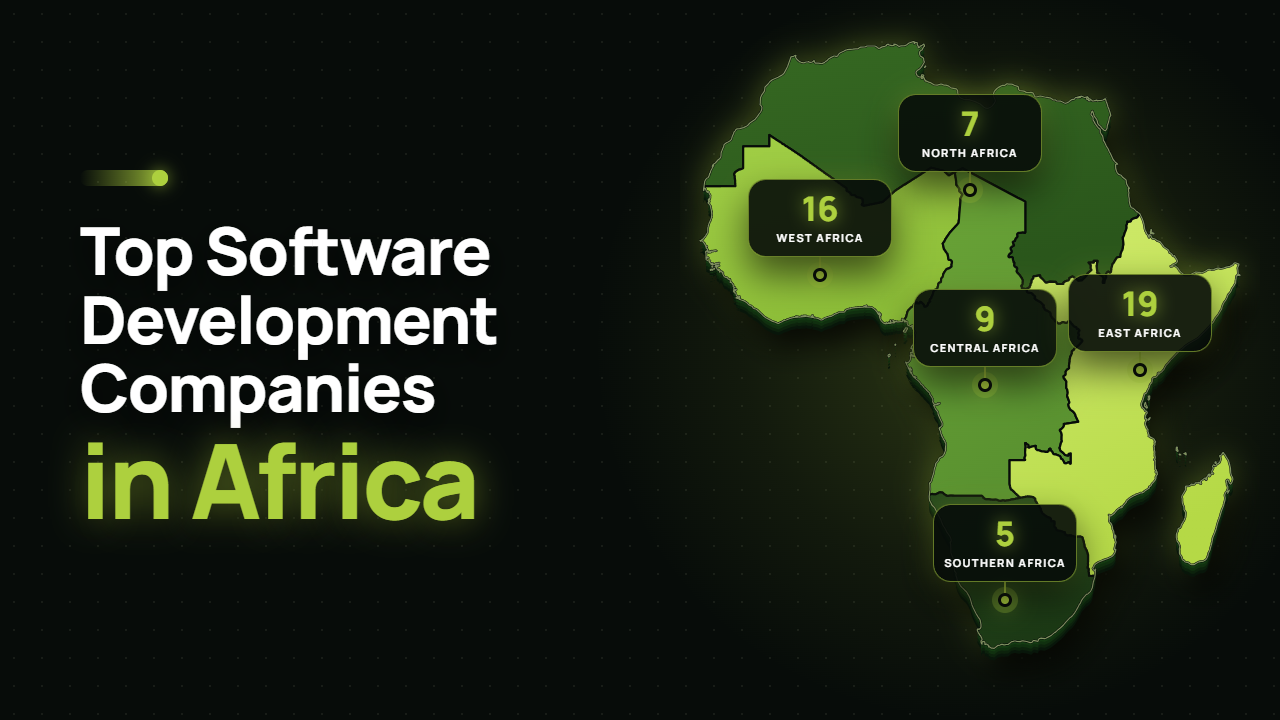
Every firm has a live website, African headquarters or Africa delivery, and fintech or banking clients. Most sit in South Africa, with others in Nigeria, Kenya, Egypt, Morocco and Ghana.
15 top fintech software development companies in Africa are compared in the table below.
Qtec Agency, the publisher of this guide, is a software and AI development company. We build lending, wallet and banking-as-a-service products for fintech teams, including clients in Africa. Qtec is based in Bangladesh and lists Uganda in its global reach.
Client logos on qtec.agency include bKash, aamarPay and Square. Our AI work covers credit scoring, fraud detection and conversational support. We also place hire-ready AI, ML and LLM engineers.
Key details of Qtec Agency are given below.
Best for: Offshore fintech and AI teams for startups, with a first release in 6 to 10 weeks.
Key fintech services: Digital lending, wallets and P2P payments, KYC onboarding, ledger engines and AML monitoring.
Entelect is a South African software engineering company. It delivers banking, insurance and financial services platforms for enterprise clients. The firm has 2,500+ people across 7 countries and lists 3,200+ projects completed since 2001.
Its client roster includes Standard Bank, Capitec, Absa, Investec, FirstRand, ING and Rabobank. For Standard Bank, Entelect reports cutting a 12-month delivery timeline to 3 months. Entelect is also an Anthropic Preferred Partner, with AI applied software engineering and AI delivery governance services.
Key details of Entelect are given below.
Best for: Large banks and insurers that need enterprise-scale engineering.
Key fintech services: Banking platforms, insurance systems, Backbase delivery and AI applied engineering.
BBD Software is a South African custom software development company. It engineers banking and insurance systems for major financial institutions. Clients shown on its site include Nedbank, FNB, Discovery Bank, Standard Bank and Investec.
One live example is a client servicing platform BBD integrated and customized for Metfriendly. Its AI approach, called Combined Intelligence, pairs client knowledge and engineering experience with agentic AI. Experienced teams still direct the work and own delivery.
Key details of BBD Software are given below.
Best for: Banks and insurers modernizing core and customer-facing systems.
Key fintech services: Custom banking software, insurance platforms, legacy modernization and agentic AI delivery.
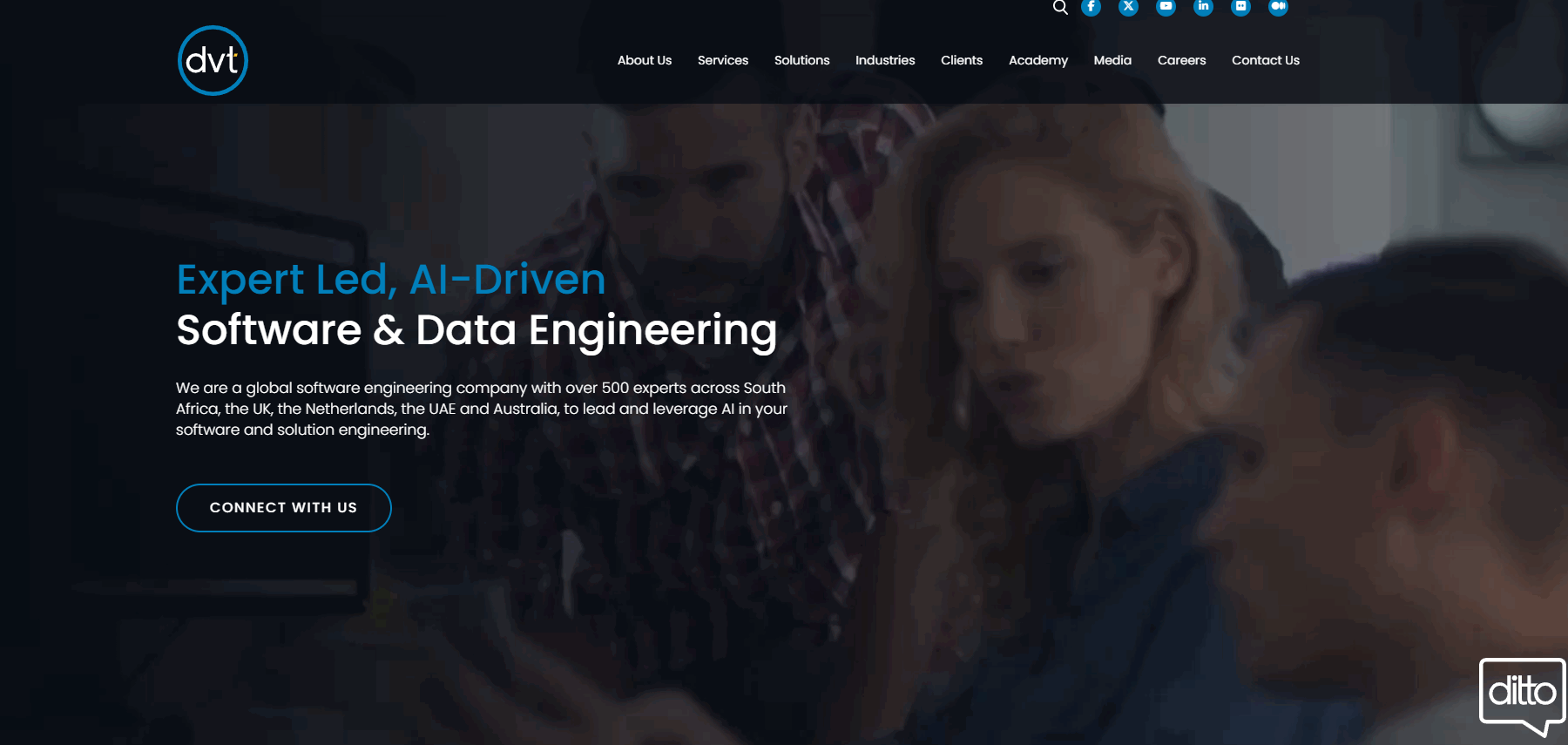
DVT is a South African software and digital transformation company with banking and insurance teams. It has 500+ technology professionals and two decades of delivery. Offices span Cape Town, Johannesburg, Durban, Kenya, the UK, the Netherlands, Australia and the UAE.
Financial clients include Nedbank, Standard Bank, Old Mutual and Momentum. Its Clippd case study reports 50% faster delivery and a 35% cost saving. For AI, DVT offers AI Build Teams, AI engineering, MLOps and Ditto, its AI bot lifecycle product.
Key details of DVT are given below.
Best for: Banks that need AI-augmented delivery teams and data engineering.
Key fintech services: Banking and insurance software, intelligent automation, MLOps and data engineering.
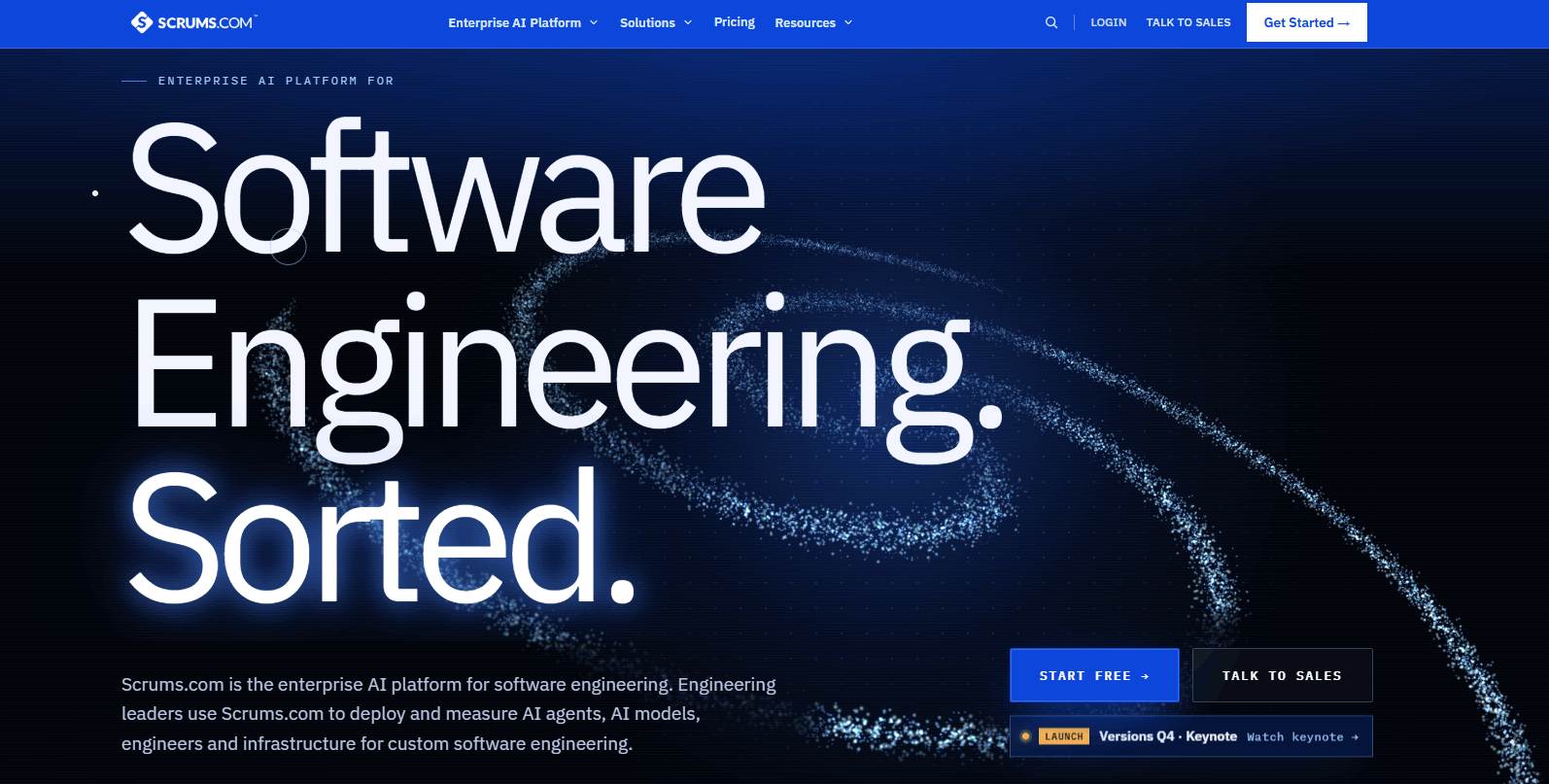
Scrums.com, formerly SovTech, is a South African software engineering company. It supplies dedicated engineering teams and AI platforms to fintech and banking clients. The company has built software since 2012, with engineers in Johannesburg, Cape Town, Nairobi, London and New York.
Financial clients include Nedbank, Investec, Network International, BankservAfrica, PPRO and Sureswipe. Its live example is the BankservAfrica CRAFT platform case study. On AI, it offers an Enterprise AI Platform, AI Agent Gateway and coding agents for legacy banking systems.
Key details of Scrums.com are given below.
Best for: Fintechs that need dedicated engineering squads on a subscription model.
Key fintech services: Dedicated squads, payments engineering, AI agent platforms and legacy modernization.
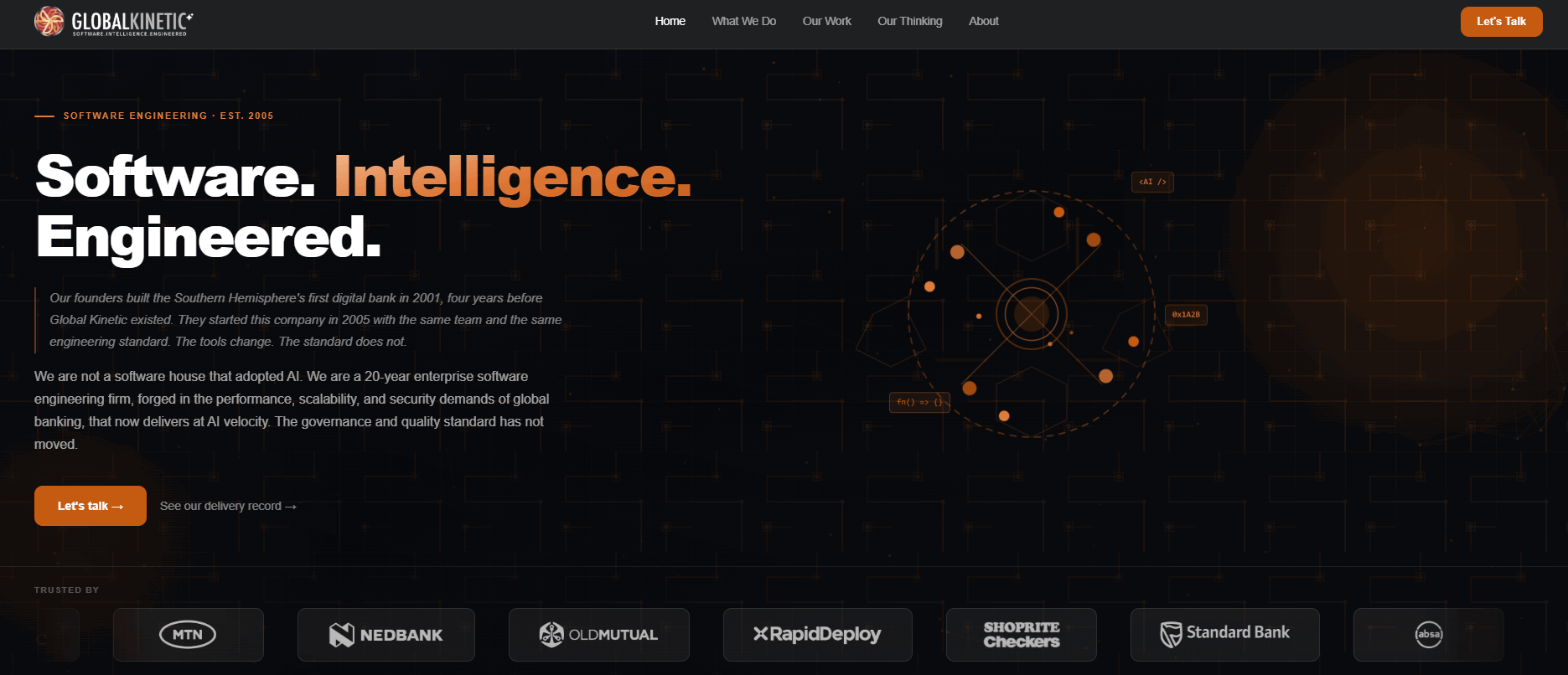
Global Kinetic is a Cape Town-founded fintech engineering company. It builds digital banking, open banking and embedded finance platforms. The firm has a 20-year history in global banking, with offices in Cape Town and Palo Alto.
Its live example is FutureBank, an open banking and embedded finance platform for banks and fintechs. Banking clients named in 2022 include Derayah Financial and Bank of Jordan. Today, Global Kinetic pitches AI-native product builds and managed teams that deliver at AI velocity.
Key details of Global Kinetic are given below.
Best for: Banks launching digital or embedded banking products.
Key fintech services: Digital bank launches, open banking, embedded finance and legacy modernization.
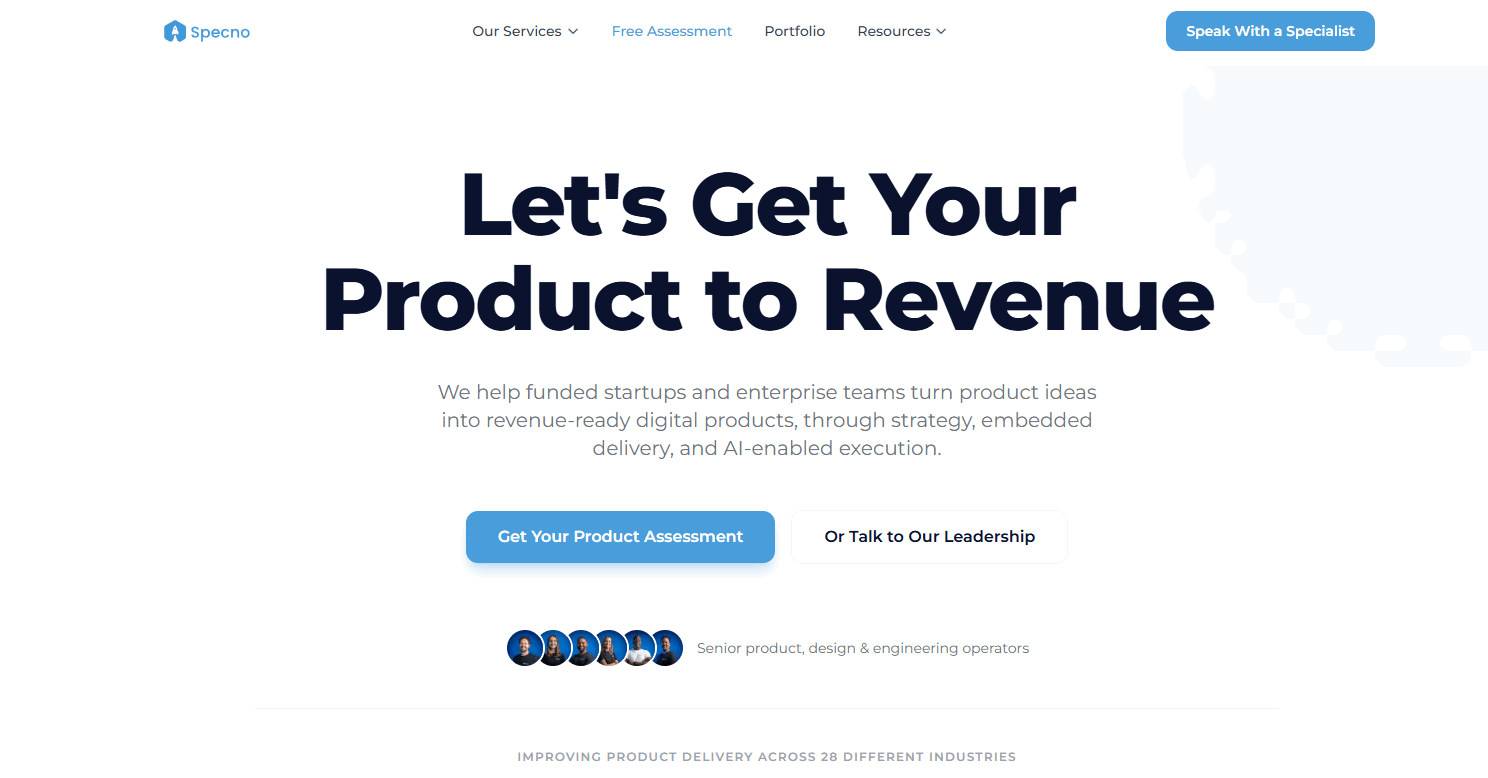
Specno is a Cape Town-based product development and venture-building agency. It designs and builds apps for financial services, retail and startups. Its offices sit in Cape Town, the Netherlands and Sweden.
Financial-services logos on its site include Standard Bank, Capitec and Old Mutual. Specno reports 150+ clients and a 4.9 rating on Clutch. A live example is Momint, a digital collectibles marketplace that Specno built.
On the AI side, its delivery pods now include AI agents, backed by AI-first architecture recommendations.
Key details of Specno are given below.
Best for: Startups that need product strategy, MVP validation and UX in one team.
Key fintech services: Product strategy, Risk Validation Sprints, Launch Pods, and UX and UI design.
Dariel is a South African custom software company that builds business-critical systems for banks, insurers and payment providers. The firm has 150+ consultants, 100+ clients and 20+ years of experience. Its offices are in Johannesburg and Cape Town.
Dariel reports 160+ engineered solutions delivered for clients such as Absa. Its other financial clients include Capitec, Discovery Bank, FNB, RMB, Hollard and Dashpay. Its Data and AI services cover AI agents and AI-ready architecture.
Key details of Dariel are given below.
Best for: Banks that need custom core systems and legacy integration.
Key fintech services: Custom core systems, legacy integration, data and AI, and long-term support.
Entersekt is a Stellenbosch-founded fintech software company. It builds authentication and 3-D Secure technology used by banks and card issuers. Products include digital account authentication, 3-D Secure ACS and Server, and Context Aware Authentication.
Banking clients include Capitec, Swedbank and Merrick Bank. In one live case study, Swisscard used Entersekt to replace one-time passwords for online payments. Its AI-powered authentication runs on Authentication Advisor, which learns from behavior and device data.
Key details of Entersekt are given below.
Best for: Banks that need fraud prevention and passwordless authentication.
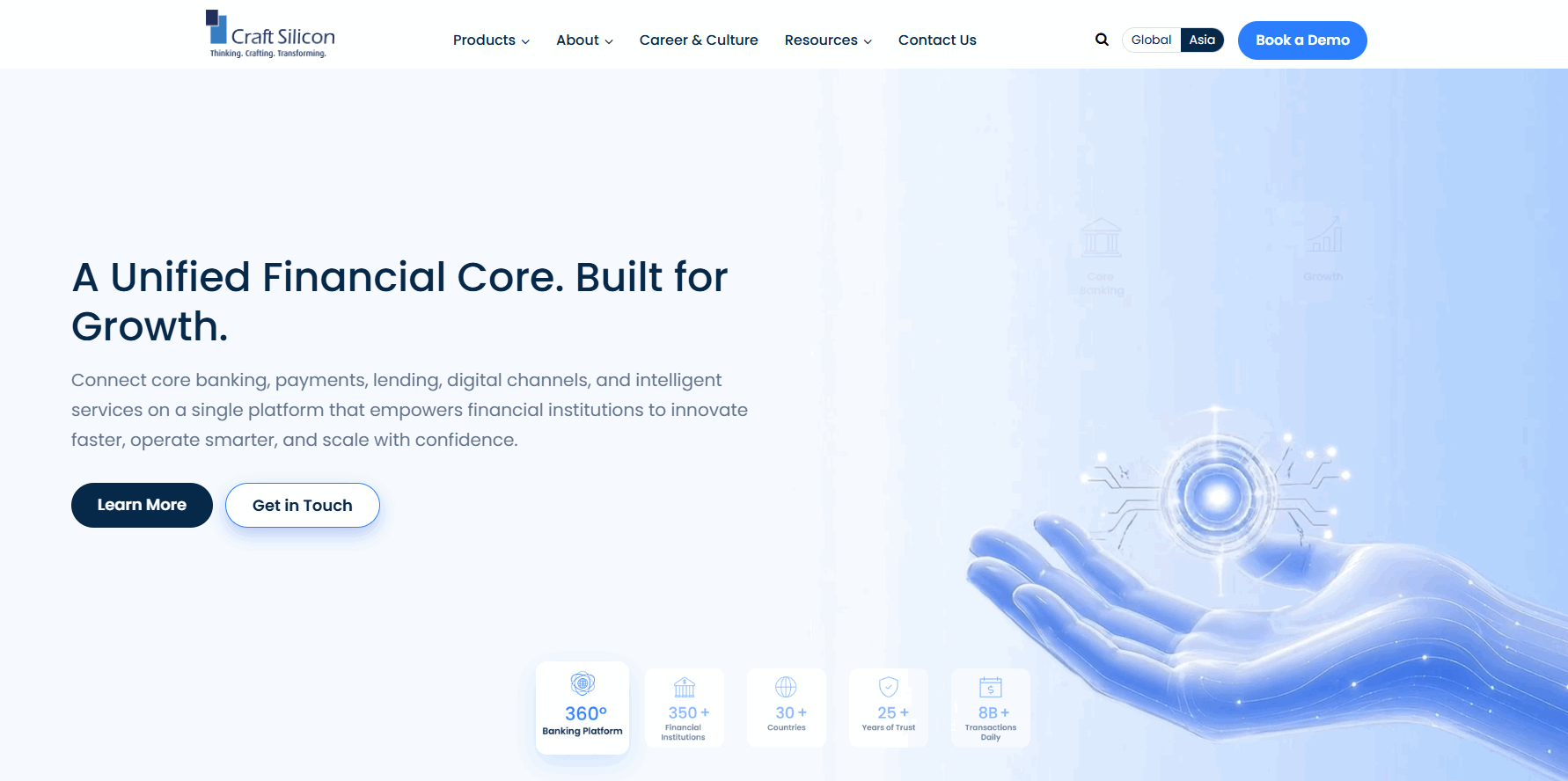
Craft Silicon is a Nairobi-headquartered fintech software company founded in 2000. It builds core banking, digital banking, lending and payment systems for banks and microfinance lenders. Its site cites 600+ staff, 300+ clients in 30+ countries and an Asia Centre in Bangalore.
Its live examples are the core banking and digital banking products shown on craftsilicon.com. The site doesn't list an AI feature at the time of writing. So if AI fraud or credit tools matter to you, ask the team directly.
Key details of Craft Silicon are given below.
Best for: East African banks, microfinance institutions and SACCOs, which are savings and credit cooperatives.
Key fintech services: Core banking, digital banking, loan management and microfinance software.
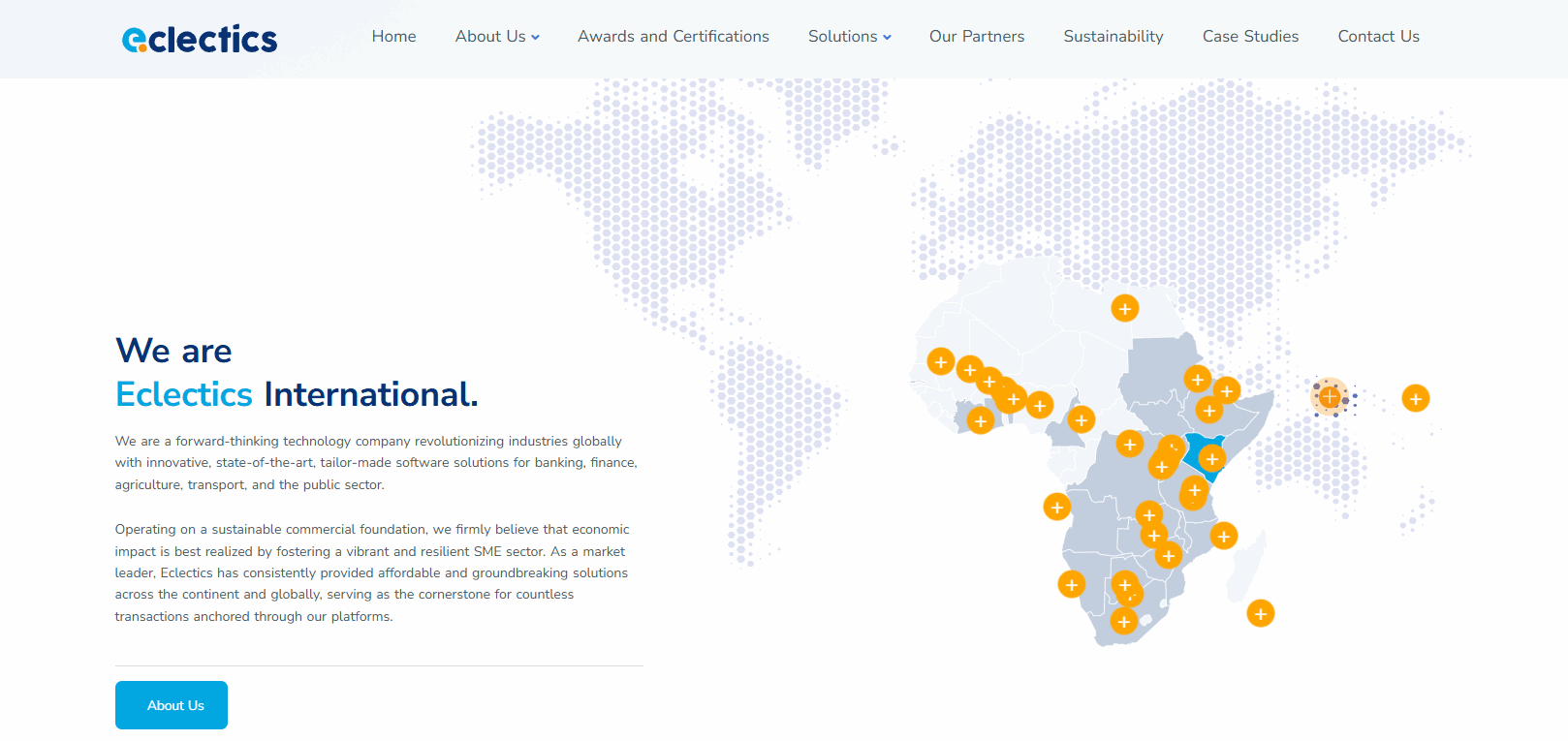
Eclectics International is a Nairobi-based fintech software company. It builds mobile banking, agency banking and payment solutions for banks and SACCOs. The firm cites 13+ years of experience, 290+ clients and offices in Kenya, Tanzania, Uganda and Nigeria.
Clients include the Central Bank of Kenya, KCB Bank, Faulu Microfinance Bank and Credit Bank. Live products include mobile banking, agency banking and the eConnect ESB integration gateway. On AI, it offers a Digital Assistant chatbot with language processing for local and mixed languages.
Key details of Eclectics International are given below.
Best for: Banks and SACCOs that need agency banking and payment aggregation.
Key fintech services: Mobile banking and wallets, agency banking, internet banking, payments aggregation and remittances.
HPS, short for Hightech Payment Systems, is a Moroccan payment software company. It builds PowerCARD, a payment platform used by banks, processors and retailers. Founded in 1995, HPS has been listed on the Casablanca Stock Exchange since 2006.
PowerCARD serves 500+ client institutions in about 100 countries, and HPS posted US$170 million in 2025 revenue. It ranked 23rd on the Forbes Middle East Fintech 50 for 2026. Live modules cover card issuing, acquiring, switching and fraud management.
Its PowerCARD-Fraud module handles fraud monitoring, but the site gives no AI detail. Ask HPS how its fraud models work before you commit.
Key details of HPS are given below.
Best for: Banks and processors that need card issuing, acquiring and switching.
SystemSpecs is a Lagos-headquartered technology group. It builds payment and financial operations software, including the Remita platform. The group has built and backed technology companies for over three decades, with offices in Lagos and Abuja.
Its portfolio includes Remita, HumanManager for HR and payroll, and STSL for infrastructure and integration. Remita is its live example, a payments platform for individuals, SMEs, corporates and governments. SystemSpecs lists no AI feature on its site, so raise AI questions early.
Key details of SystemSpecs are given below.
Best for: Governments and corporates that need payment collection and payroll automation.
Key fintech services: Payment collection, financial operations, business automation and HumanManager payroll.
IT Consortium is an Accra-based fintech software company. It builds mobile banking, bulk payment and payment aggregation solutions for banks, merchants and the public sector. The company completed PCI-DSS certification, the card data security standard, in July 2017.
Its banking products include Transflow, mobile banking, bulk payments, informal savings and lending, and bill payment aggregation. Live examples include R-Pay for retail payments and the Chango app. The site lists no AI feature, so confirm any AI plans during scoping.
Key details of IT Consortium are given below.
Best for: Ghanaian banks, merchants and schools that need payment collection.
Key fintech services: Transflow, bulk payments, informal savings, bill payments aggregation and mobile banking.
Sumerge is a Cairo-based software and integration company. It modernizes banking middleware, the layer linking core systems to apps, for banks in Egypt and the Gulf. It also builds digital channels and has delivered 500 projects since its 2005 incorporation in Egypt.
Clients include Riyad Bank, Bank ABC, Ebank and AXA Egypt. Its live example is Riyad Bank's event-driven middleware modernization. On AI, Sumerge offers agentic AI transformation consulting, agentic managed services and agentic digital channels.
Key details of Sumerge are given below.
Best for: Banks that need integration, middleware and agentic AI services.
Key fintech services: Enterprise integration, banking middleware, digital channels and agentic AI.
Live website: sumerge.com
How Is AI Changing Fintech Software Development in Africa?
AI is changing fintech software development in Africa by automating fraud checks, credit calls and some coding. The scale explains the shift. Africa processed US$1.4 trillion in mobile money in 2025, 66% of the global total.
5 ways AI is changing fintech software development in Africa are given below.
AI fraud detection: M-PESA uses AI to flag unusual transactions, and Airtel Money Rwanda runs machine learning models. The aim is to stop suspicious transfers before money leaves the wallet.
Agentic AI in banking: Agentic AI is software that plans and completes tasks with limited human input. FNB points to loan adjudication and dispute resolution, while Capitec Pulse reviews caller activity in about 10 seconds.
AI credit decisioning: Nedbank applies AI to credit decisioning and early warning. Lenders can score borrowers with little credit history and spot accounts heading toward default.
AI-assisted engineering: Developers now sell AI agent platforms and AI build teams, as Scrums.com, DVT and Entelect show. Faster, AI-supported delivery has become part of the sales pitch.
AI also supports financial inclusion. FNB uses multilingual AI in isiZulu and isiXhosa, so customers can bank in their home language. Teams scoping AI development services should plan for language support from the start.
What Services Do Fintech Software Development Companies Offer?
Fintech software development companies offer 7 core services, from digital banking apps to USSD and agent banking systems. Most projects start with mobile app development, because African customers bank mainly on their phones.
7 core services of fintech software development companies are outlined below.
Digital banking and neobank apps: Full mobile and web banking for new digital banks and for incumbents moving online.
Mobile money and e-wallet platforms: Wallets for storing value, sending money and paying merchants, often on low-cost Android phones.
Payment gateway and API integration: Connections to M-Pesa, MTN MoMo, Flutterwave and Paystack, often through tools like the M-Pesa Daraja API.
Lending and alternative credit scoring platforms: Loan apps that score borrowers using mobile money history and other alternative data.
Core banking integration and legacy modernization: Linking new apps to older core systems, or replacing those systems in planned stages.
KYC, AML and compliance software: Know your customer checks, anti-money laundering monitoring and regulator reporting built into the product.
USSD and agent banking systems: USSD menus for feature-phone users, plus tools for agents who handle cash deposits and withdrawals.
Which African Countries Lead Fintech Software Development?
The African countries that lead fintech software development are South Africa, Nigeria, Kenya and Egypt. Morocco also plays a strong role. About half of Africa's software developers work in South Africa, Nigeria, Morocco, Kenya and Egypt.
McKinsey makes that point in Fintech in Africa: The end of the beginning. The funding figures below show H1 2026 total tech funding from Africa: The Big Deal, not fintech alone.
4 leading African fintech development markets are given below.
South Africa: The hub for enterprise banking engineering, with deep delivery teams in Johannesburg and Cape Town. Its startups raised US$83 million in H1 2026 tech funding.
Nigeria: Payments drive the market, with Lagos at the center of collections, cards and wallet builds. Nigerian tech startups raised US$254 million in H1 2026.
Kenya: Kenya is the region's mobile money hub, built around M-Pesa and agency banking. Kenyan tech startups attracted US$126 million in H1 2026.
Egypt: Cairo teams focus on banking integration and digital channels for Egypt and the Gulf. Egypt topped these four markets with US$327 million in H1 2026.
What Regulations Must Fintech Software Meet in Africa?
Fintech software in Africa must meet central bank licensing, data protection and AML and KYC rules. The rules change by country, so plan compliance from day one.
Compliance isn't a launch task. It's a design input.
Key fintech regulations by country are shown below.
South Africa: The South African Reserve Bank, or SARB, and the Financial Sector Conduct Authority, or FSCA, oversee fintechs. POPIA, the Protection of Personal Information Act, governs data.
Nigeria: The Central Bank of Nigeria licenses payment and lending businesses. The Nigeria Data Protection Act of 2023 sets the rules for personal data.
Kenya: The Central Bank of Kenya licenses digital lenders under its Digital Credit Provider rules. The Data Protection Act of 2019 covers customer data.
Ghana and Egypt: The Bank of Ghana and the Central Bank of Egypt supervise payment and digital banking services.
Cross-border: PCI-DSS protects card data, and ISO 27001 covers information security. AML and KYC checks apply in almost every market.
How Much Does Fintech Software Development Cost in Africa?
Fintech software development in Africa costs from about US25,000forabasicmobileapp.CustomfintechsoftwareusuallystartsaboveUS150,000, and multi-country digital banking can pass US$300,000.
Typical price ranges for common fintech builds are shown in the table below.
Project type
Typical cost
Basic mobile fintech app
From about US$25,000
Custom fintech software
US$150,000+
Multi-country digital banking platform
US$300,000+
South African fintech MVP
R120,000 to R350,000
South African digital banking platform
R800,000 to R3,000,000+
An MVP, or minimum viable product, is the smallest version you can launch and test. Hourly rates also shape the bill. Many Nigerian and Kenyan fintech developers listed on Clutch charge US25toUS49 an hour.
4 factors move the final price most: scope, compliance, third-party integrations and the number of markets. Each new country adds licensing checks, local payment rails and more testing.
How to Choose a Fintech Software Development Company in Africa?
To choose a fintech software development company in Africa, start with proof of live fintech work. Then test compliance, security, integration skills, AI use and support terms. The same checks apply whether you hire locally or choose outsourcing software development.
6 steps to choose a fintech software development company are given below.
Check live products and fintech clients. Ask for app store links, live platforms and named banking clients. A demo isn't proof, but a product with real users is.
Confirm local regulatory experience. Ask which central bank approvals the team has worked through. Hands-on SARB, CBN or CBK experience reduces costly rework later.
Review security certifications. Look for PCI-DSS, ISO 27001 or SOC 2 reports. SOC 2 is an independent audit of how a vendor protects customer data.
Test mobile money and API integration skills. Ask for past work with M-Pesa, MTN MoMo, Flutterwave or Paystack. A short paid pilot reveals integration skill faster than any sales call.
Ask how they use AI in delivery and in the product. Find out whether AI speeds up their coding and testing. Then ask which AI features, such as fraud scoring, they can build for you.
Agree on pricing model and post-launch support. Pick fixed price for tight scopes or time and materials for evolving products. Put support hours, uptime targets and handover terms in writing.
What Are the Pros and Cons of Hiring an African Fintech Software Development Company?
Hiring an African fintech software development company gives you local payment and regulatory know-how. Quality and market coverage vary, though. If no local firm fits, you can hire offshore developers and pair them with local advisers.
The pros and cons of hiring an African fintech software development company are given in the table below.
Pros
Cons
Mobile money and USSD know-how, including M-Pesa and MTN MoMo
Regulations differ by country, from SARB to CBN and CBK
Local regulatory experience with SARB, FSCA and POPIA
Smaller firms may lack enterprise certifications
Competitive pricing compared with Western markets
Talent is concentrated in five countries
Many rates fall between US$25 and US$49 an hour
Quality varies widely, so check reviews
Experience with banks such as Standard Bank, Capitec and KCB
Real-time payment rails exist in only a few countries
Which Is the Best Fintech Software Development Company in Africa?
The best fintech software development company in Africa depends on your build stage, market and product type.
Entelect is the enterprise pick for large banks. Specno suits startups that need a validated MVP. HPS is the payments pick for card issuing and switching.
Which Is the Best Fintech Software Development Company in South Africa?
Entelect is the best fintech software development company in South Africa for enterprise banking. Its Standard Bank work, a 12-month timeline cut to 3 months, shows real delivery speed. For fintech squads, Scrums.com stands out, with 380+ employees ready to staff dedicated teams.
Which Is the Best Fintech Software Development Company in Nigeria?
SystemSpecs is the best fintech software development company in Nigeria for payment collection. Remita, its live platform, handles payments for government bodies as well as businesses. Nigerian startups that want an offshore team can also look at Qtec Agency, the publisher of this guide.
Which Is the Best Fintech Software Development Company in Kenya?
Craft Silicon is the best pick in Kenya for core banking. Eclectics International is the pick for agency and mobile banking.
Craft Silicon has built banking software since 2000. Eclectics International cites 1,500+ projects delivered across its markets.
How Do Fintech Development Partners Compare?
Fintech development partners differ in who owns the product and where the team sits. The two comparisons below help you pick the right type of partner.
What Is the Difference Between a Fintech Software Development Company and a Fintech Company?
A fintech software development company builds software for clients, while a fintech company runs its own financial product. M-PESA and Remita are fintech products with their own users and licenses.
A development company works to your product roadmap under a service agreement. SystemSpecs sits in both camps, since it builds software and runs Remita.
What Is the Difference Between Local and Offshore Fintech Software Developers?
Local African developers bring regulatory and mobile money knowledge, while offshore developers bring cost and talent depth. Local teams already know SARB, CBN or CBK rules and the M-Pesa and MoMo rails.
Offshore teams can scale faster and often cost less for some roles. Many fintechs run a hybrid team, with local advisers and offshore engineers.
Frequently Asked Questions
The questions below cover build timelines, USSD, outsourcing and the tech stack behind African fintech apps.
How Long Does It Take to Build a Fintech App in Africa?
A fintech app in Africa takes 3 to 10 months to build, depending on scope and markets. A single-market mobile wallet or fintech MVP takes about 3 to 5 months. Multi-country digital banking takes 6 to 10 months, and early product design and development keeps that range realistic.
Do African Fintech Developers Build USSD and Mobile Money Integrations?
Yes, African fintech developers build USSD and mobile money integrations because millions of customers depend on them. Africa had 347 million active 30-day mobile money accounts in 2025, the GSMA reports. Builders of banking and payment apps connect to M-Pesa's Daraja API, MTN MoMo and Africa's Talking for USSD.
Is Outsourcing Fintech Development in Africa Worth It?
Yes, outsourcing fintech development in Africa is worth it for teams that need local payment and regulatory know-how. Rates often beat Western markets, and local teams already know M-Pesa, MoMo and central bank rules. Talent is also deep in the main hubs, from Lagos to Nairobi.
What Technologies Are Used in Fintech Software Development?
Fintech software development uses cross-platform mobile frameworks, secure back-end languages, cloud platforms and machine learning tools.
Common technologies used in fintech software development are given below.
Flutter and React Native: Cross-platform frameworks for building one mobile app for Android and iOS.
Kotlin and Swift: Native languages for Android and iOS apps that need top performance.
Node.js and Java Spring Boot: Back-end frameworks for APIs, payment logic and ISO 20022 payment messages.
AWS, Azure and Google Cloud: Cloud platforms that host fintech apps with strong security controls.
PostgreSQL: A reliable relational database for ledgers, accounts and transaction records.
Kafka: An event streaming tool that moves real-time payment events between systems.
AI and ML frameworks: Tools such as TensorFlow and PyTorch for fraud scoring and credit models.
Teams that standardize on Flutter can hire Flutter engineers to speed up cross-platform builds.
Final Thoughts
Picking from the top fintech software development companies in Africa comes down to fit. Your build stage, target market and AI and compliance needs decide the right partner.
Keep 3 takeaways in mind. First, verify live products, not polished demos.
Next, confirm the team knows your market's compliance rules. Then ask how it uses AI in delivery and in the product.
Want a second opinion on your shortlist? Book a meeting with Qtec Agency, and our team will talk through your scope, markets and AI plans.
Have a Project in Mind? Let's Build Something Great Together.
Tell us about your vision and we'll craft a tailored strategy to turn it into reality.
I’m Mosarrof Hossain, founder of Qtec Agency and a technical AI and software development specialist. I write about AI, custom software and building reliable digital products.
AI Summarize With
Kickstart with your dedicated squad in 7 days.
Work with top-tier engineers for your next project

 Contact Us